Sony raises the bar on ultra-fast displays with updated InZone OLED monitor
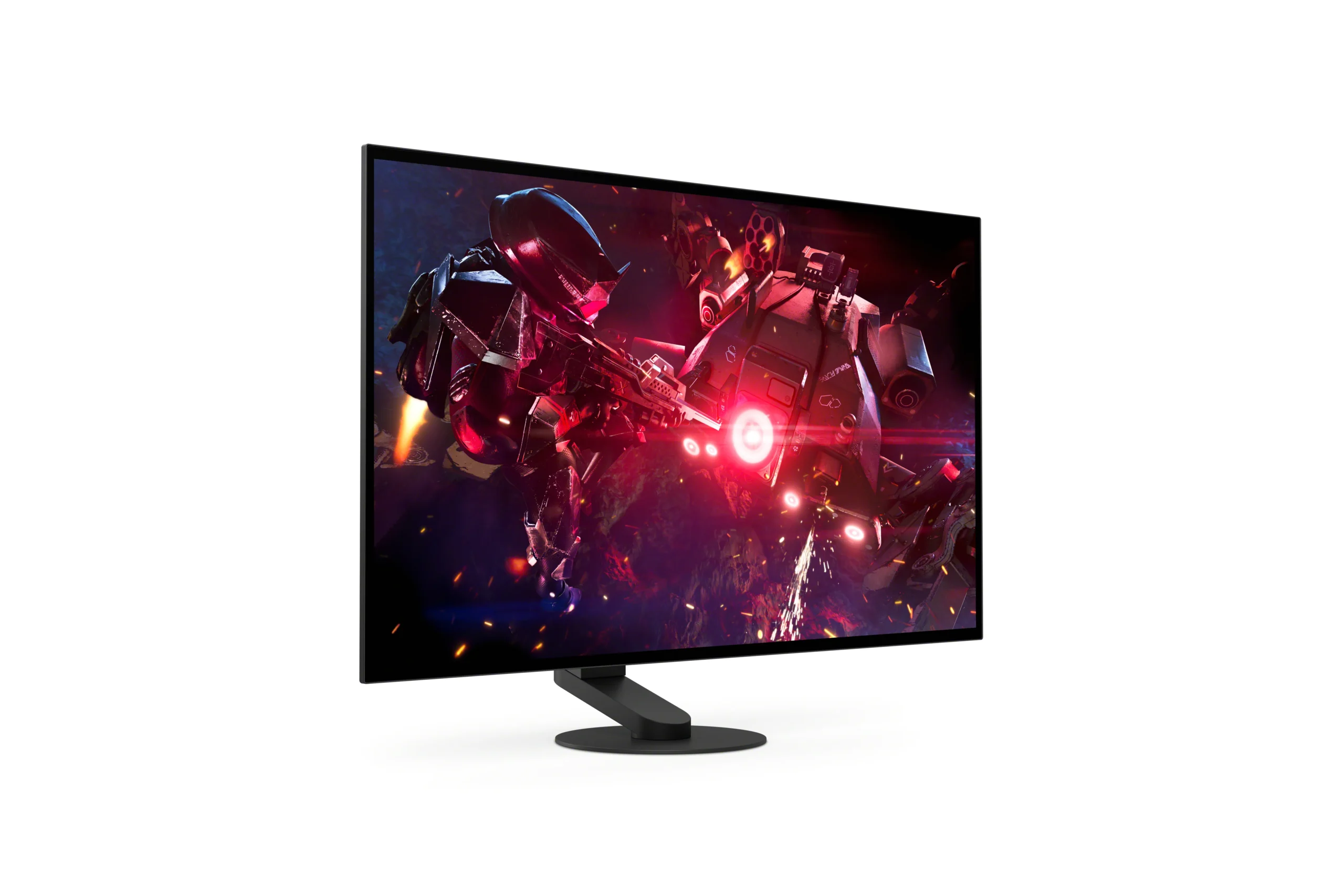
Sony’s second-generation InZone M10S II, announced this week, signals an aggressive step forward for the company’s fledgling monitor line. The 27-inch OLED screen keeps the understated, low-profile aesthetic of its predecessor but layers on a host of technical upgrades aimed squarely at competitive gamers who demand both speed and image fidelity. Scheduled to arrive later this year exclusively through Sony’s online storefront at the same $1,099.99 launch price as the original model, the M10S II attempts to justify every penny with brighter visuals, higher peak refresh rates, and smarter motion-handling tools.
A fourth-generation WOLED panel built for brightness
The heart of the monitor is a fresh fourth-generation WOLED panel—LG Display’s latest Primary RGB Tandem technology. Compared with earlier white-OLED implementations, the new layer structure boosts both brightness and contrast, bringing performance closer to cutting-edge QD-OLED screens without adopting the quantum-dot approach. Sony cites higher sustained brightness in standard use and deeper specular highlights in HDR modes, translating into punchier imagery whether users are battling through dark dungeons or reviewing creative work.
Traditional white-OLED panels often cede brightness advantage to their quantum-dot rivals, but the tandem arrangement in this panel leverages two emissive layers to maintain color volume at higher luminance levels. The practical result for gamers is reduced risk of washed-out colors during bright explosions or sun-lit racetracks—scenes that can push less capable OLEDs into visible desaturation.
Dual-mode refresh rate prioritizes speed or clarity
Sony’s headline feature remains the extraordinary refresh ceiling. At its native 2560 × 1440 resolution via DisplayPort, the display can hit 540 Hz. For players willing to drop to 1280 × 720, an even loftier 720 Hz option appears. These dual modes target esports titles like Valorant, Counter-Strike 2, or Apex Legends, where raw frame rate can boost reaction time and input feel more than pixel density matters. A lightning-quick 0.02-millisecond gray-to-gray response time keeps ghosting in check during those high-speed sequences.
While few consumer graphics cards can reliably sustain 500-plus frames per second at QHD in modern games, the monitor’s ceiling future-proofs it for the inevitable arms race in GPU power. Meanwhile, the 720 Hz 720p mode may suit training scenarios or retro titles in which resolution takes a back seat to absolute smoothness.
Black Frame Insertion finally arrives
Arguably the most practical addition is Black Frame Insertion (BFI). By placing a short black frame between every pair of active frames, BFI reduces perceived motion blur—an effect that can make scrolling text or panning scenery appear clearer to the human eye. The trade-off, historically, is significant brightness loss, but Sony claims its algorithm retains more luminance than competing implementations. In BFI mode, the panel caps at 240 Hz, a sweet spot that balances motion handling and visibility without dimming the screen to flashlight levels.
Competitive players who already drive high frame rates often turn to BFI to sharpen enemy silhouettes, so the inclusion may win converts who skipped Sony’s first InZone OLED for lack of the feature. The enhanced brightness could also broaden BFI’s appeal beyond esports diehards to general users who want blur-reduced web browsing or video playback.
Matte coating with new super anti-glare film
Reflectivity continues to plague glossy OLED monitors in sunlit rooms. Sony keeps the matte coating from the first-generation M10S but overlays it with a “super anti-glare” film that further diffuses direct reflections while preserving color accuracy. The combination should prove valuable for players with bright ambient lighting or those who double the display as a daytime productivity panel.
For shoppers torn between matte and glossy finishes, the choice comes down to perceived depth versus practicality. Glossy coatings deliver a glass-like richness at the cost of mirror-like reflections, whereas matte surfaces trade a slight softening of contrast for far better control over glare. Sony is betting most users value adaptability over showroom pop.
Variable Refresh Rate, G-Sync compatibility, and anti-flicker logic
Support for Variable Refresh Rate (VRR) is mandatory in a premium gaming display, and the M10S II obliges through both DisplayPort 2.1a and HDMI 2.1. Nvidia G-Sync compatibility ensures smooth adaptation to changing frame rates, and Sony touts an “extreme anti-VRR flicker” system designed to suppress the low-frequency brightness fluctuations that sometimes accompany VRR on OLED panels. The effort should reduce distracting brightness pulsing in stubbornly low or erratic frame-rate scenarios such as open-world RPGs.
Modern connectivity and a refreshed stand
Behind the panel sit one DisplayPort 2.1a connector (UHBR 13.5, up to 54 Gbps) and one HDMI 2.1 port capable of 4K 120 Hz input for console play—though the screen will downscale to its native QHD resolution. A downstream USB hub handles peripherals such as a mouse, keyboard, or webcam, turning the monitor into a compact dock for desktop setups.
The circular stand that gave the first InZone monitor its unique silhouette returns in revised form. It still occupies minimal desk space but now allows wider tilt adjustment, making it easier to angle the screen for ergonomics or webcam framing. Height and pivot remain unchanged, so users who need those motions may still prefer third-party monitor arms—the VESA mount remains exposed and standard.
Where the M10S II fits in a crowded OLED field
When Sony entered the monitor market, OLED options were scarce and expensive. Today the landscape is much busier, and the new model launches into fierce competition. LG’s own 27-inch QHD “dual-mode” OLED recently dropped to $799, undercutting Sony by $300 while promising similar speed. Asus fields the ROG Swift PG27AQWP-W at an identical $1,099 price, luring shoppers with a glossy finish and a reputation for gamer-centric firmware.
Imagem: Camer FaulknerCloseCamer FaulknerEdi
On the value end, Alienware just made headlines by unveiling a 27-inch QD-OLED boasting 240 Hz for only $350 after early discounts. That screen cannot touch Sony’s 540 Hz ceiling, but for players content with 240 Hz—or without the GPU horsepower to exceed it—the price gulf is enormous.
Sony’s strategy, therefore, hinges on appealing to enthusiasts who want it all: top-tier refresh potential, the motion-clarity perks of BFI, and premium build quality in a svelte footprint. Whether that subset is large enough to sustain a four-figure price remains to be seen, but by packing more marquee features into the same chassis, the company at least offers a clearer value proposition than with the inaugural InZone release.
Release timing and purchasing details
Sony has not provided an exact ship date, though representatives say the monitor will arrive “later this year.” Preorders will exclusive run through the official Sony online store, a tactic that simplifies supply forecasting but means shoppers will not likely see steep launch-week discounts from third-party retailers. Warranty terms match the prior model, with OLED burn-in coverage limited to normal usage guidelines. Sony’s trio of InZone gaming headsets—H3, H5, and H9—will continue to unlock picture presets on the monitor via USB connection, though the display functions perfectly fine without them.
Early impressions suggest a stronger sequel
On paper, the M10S II remedies nearly every critique leveled at Sony’s first OLED attempt. It is brighter, more versatile, less prone to motion-blur complaints, and includes future-minded connectivity. Gamers who play at the razor’s edge of competitive performance may flock to its 540/720 Hz options, while photographers and video editors could benefit from the richer HDR headroom of the tandem WOLED panel.
Yet the monitor market rarely stands still. New QD-OLED and Mini LED competitors arrive each quarter, with ever-lower prices threatening to make $1,099 feel premium in the literal sense. If Sony can back its claims of best-in-class BFI brightness and anti-flicker logic with real-world results, the M10S II may carve out a distinctive niche. Otherwise, it risks becoming another expensive option in a sea of rapidly improving alternatives.
Key specifications at a glance
- Screen size & resolution: 27 in, 2560 × 1440 native
- Panel type: Fourth-generation WOLED (RGB Tandem)
- Refresh rates: 540 Hz at QHD, 720 Hz at 720p; 240 Hz with BFI
- Response time: 0.02 ms GtG
- Variable Refresh Rate: DisplayPort 2.1a & HDMI 2.1, G-Sync compatible
- Ports: 1× DP 2.1a (UHBR 13.5), 1× HDMI 2.1, USB hub
- Coating: Matte with super anti-glare film
- Stand: Disc-shaped, improved tilt, VESA-compatible
- Price: $1,099.99 USD
- Availability: Exclusive through Sony’s online store, later in 2026
FAQ
Q: Does the M10S II support consoles like PlayStation 5 and Xbox Series X?
A: Yes. The HDMI 2.1 port accepts 4K 120 Hz signals, which the monitor internally downsamples to its native 1440p resolution.
Q: How does Black Frame Insertion affect eye strain?
A: BFI can introduce mild flicker that some users notice, but Sony’s implementation operates at 240 Hz, which most people find comfortable. Users sensitive to flicker can simply disable the mode.
Q: Is there any risk of OLED burn-in during prolonged desktop use?
A: While modern OLED panels include pixel-shifting and automatic brightness limiters, static HUD elements can still cause retention over time. Sony’s warranty covers normal usage but does not extend to misuse, so owners should enable screen savers and vary content where possible.
Q: Can the stand rotate the display into portrait orientation?
A: No. The included stand offers tilt adjustment only. Users who need pivot or height control will need a VESA-compatible arm or stand.
Q: Why choose this monitor over cheaper QD-OLED alternatives?
A: The M10S II targets buyers who need extremely high refresh rates up to 540 Hz, integrated BFI with minimal brightness loss, and Sony’s particular combination of anti-glare treatment and design aesthetics. Budget OLEDs may lack one or more of those features.