Amazon’s sleekest streaming stick yet sheds the power brick and slims down
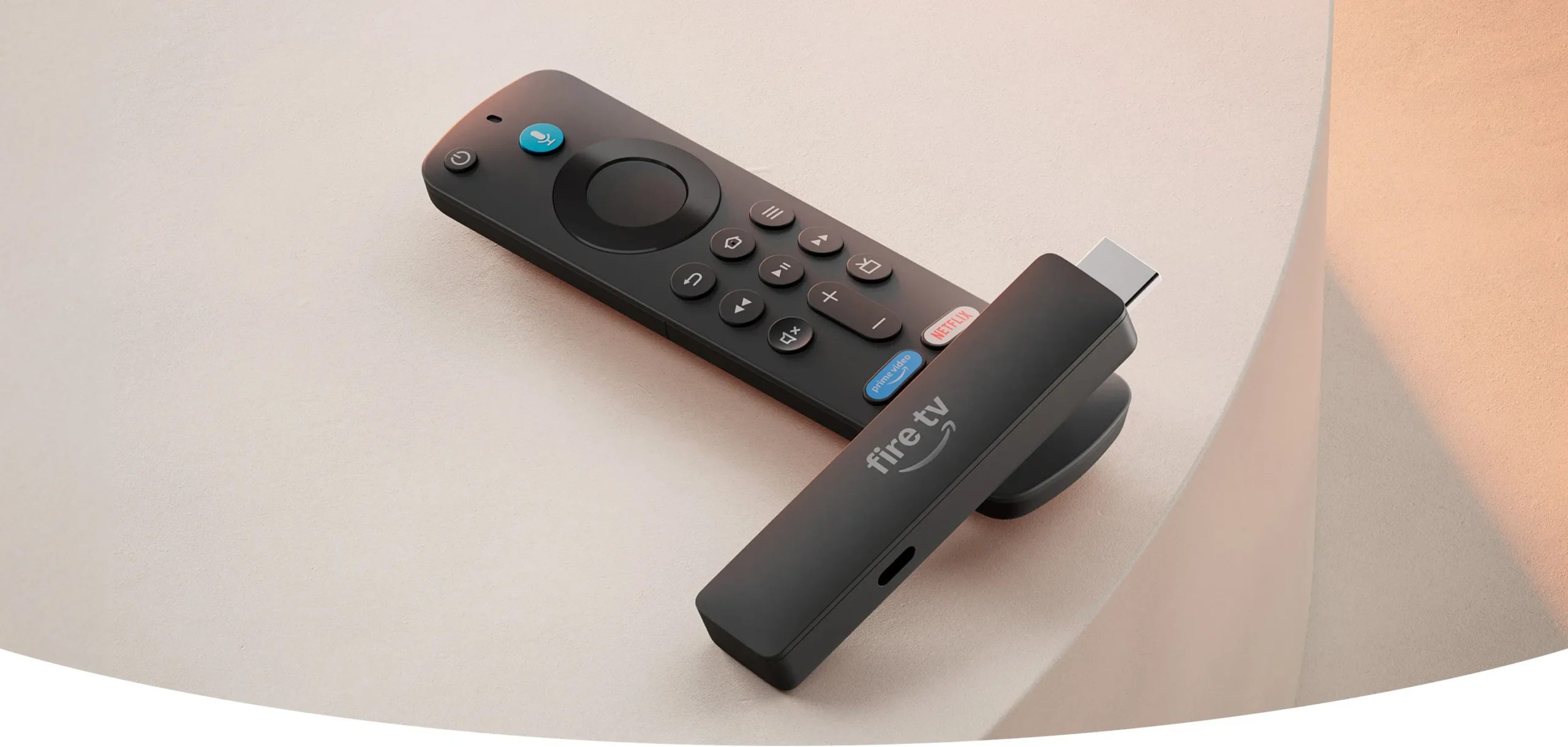
Amazon has introduced a newly redesigned Fire TV Stick HD that places portability, convenience, and a lower price point at the center of its pitch to cord-cutters. At $34.99, the device is not only the most affordable Fire TV Stick currently on sale but also the thinnest hardware the company has shipped in its streaming lineup, slimming down by about 30 percent compared with the previous generation.
A stronger focus on the “stick” in streaming stick
Over the years, Amazon’s Fire TV Sticks have grown more powerful but, paradoxically, also bulkier and increasingly dependent on wall outlets. The latest model reverses that trend. By trimming the chassis, Amazon can now power the device directly through a television’s USB port—a change that eliminates a dangling power brick and frees up wall sockets. For hotel-hopping travelers, the lack of a proprietary adapter means one fewer cable to pack. Should a user’s television lack USB power, Amazon does provide an alternative: the stick can still accept power via a standard USB-C cable and a familiar wall plug.
Updated connectivity: Wi-Fi 6, Bluetooth 5.3, and beyond
Inside, the Fire TV Stick HD receives the networking upgrade early adopters have expected: Wi-Fi 6 compatibility offers increased bandwidth and improved performance in crowded wireless environments, while Bluetooth 5.3 supports lower-latency accessory pairing and reduced power consumption for connected headphones, speakers, and game controllers. The inclusion of these standards narrows a specification gap that had opened between Amazon’s 1080p stick and the company’s higher-end Fire TV Stick 4K Max.
Fire TV OS refresh with Alexa Plus onboard
Hardware gains go hand in hand with the latest version of Amazon’s Fire TV operating system, which ships preinstalled. The redesigned interface prioritizes personalized recommendations and faster search, tapping into “Alexa Plus,” Amazon’s upgraded voice assistant. According to Amazon, this new AI layer parses more natural speech patterns and delivers quicker results with greater contextual awareness—attributes that should matter most when viewers shout “play the next episode” from across the room or ask for “movies about time travel that aren’t too scary.”
The voice-first approach extends to the Fire TV remote, which still sports the iconic blue Alexa button for on-demand assistance. Long-press to control smart-home devices, short-press to seek out a title, or simply use hands-free commands if your TV setup supports microphone pass-through. Amazon says Alexa Plus can now juggle back-to-back queries without needing the wake word every single time, an incremental but welcome usability boost.
Accessibility spotlight: Adaptive Display
Another noteworthy addition is an upcoming feature Amazon calls “Adaptive Display.” Aimed at users with visual impairments, the setting enlarges text, menus, and user-interface elements while proportionally resizing preview artwork. By letting artwork remain visible, the company hopes to avoid the claustrophobic feeling of basic zoom modes that crop thumbnails entirely. According to Amazon, Adaptive Display will arrive through an over-the-air update shortly after the stick begins shipping.
Competing in a crowded market
Amazon’s announcement arrives as rivals jockey for living-room supremacy. Roku’s budget Express 4K Plus often dips below $30 during seasonal promotions, while Google’s Chromecast with Google TV (HD) hovers around $29.99 and offers a clean Android TV interface. Amazon counters with deeper Alexa integration and tight hooks into its own storefront, leaning on Prime Video and Amazon Music as built-in upsell channels.
Analysts note that aggressive hardware pricing remains key. The Fire TV Stick HD’s $34.99 starting price undercuts Amazon’s own Fire TV Stick 4K ($49.99) and 4K Max ($59.99), potentially acting as a gateway for households that still own 1080p screens or simply want a secondary device for the bedroom. The combination of slimmer design, USB power, and modern radios may also appeal to hotels and universities looking for easy plug-and-play streaming options that can be secured behind captive portals.
Preorders and regional rollout
Preorders opened immediately following the announcement, with shipping slated for the end of the month across seven regions:
- United States
- United Kingdom
- Canada
- Mexico
- Japan
- Australia
- New Zealand
Amazon says additional markets will follow, though no timeline has been offered.
What stays the same—and what’s missing
Although the device reflects meaningful physical and wireless upgrades, it remains a strictly 1080p streamer, topping out at Full HD resolution. Users with 4K televisions who want HDR formats such as HDR10+ or Dolby Vision must still spring for the Fire TV Stick 4K or the flagship 4K Max. Dolby Atmos audio pass-through, however, remains intact on the new HD model, provided the host TV or soundbar can decode it.
Amazon includes 8 GB of internal storage, identical to previous generations and adequate for app installations but perhaps restrictive for large games. Processing horsepower likewise appears unchanged; benchmarks from earlier Fire TV Sticks translate into snappy menu navigation but occasional pauses when rapidly switching between multiple high-demand apps.
Imagem: Amaz
Environmental considerations
In keeping with the company’s larger sustainability pledge, Amazon says the streaming stick’s enclosure is built from 30 percent post-consumer recycled plastics, while the packaging is completely curbside-recyclable. A new Low-Power Mode kicks in when the stick detects inactivity, reducing energy draw during off-hours—an especially relevant feature when the device remains plugged into a TV’s always-powered USB port.
The verdict so far
Hands-on impressions will have to wait until review units land, but on paper the Fire TV Stick HD positions itself as the default choice for anyone seeking a clutter-free, travel-friendly way to bring the full Fire TV experience to a 1080p display. By shaving off both girth and the need for a dedicated power brick, Amazon seems to have listened to long-standing user requests without bumping up the price.
For existing Fire TV owners, the math is straightforward: if power-by-USB is a must-have or if Wi-Fi 6 networks populate your home, the upgrade could be worthwhile. Otherwise, the previous generation remains serviceable and often discounted. For first-time streamers, especially those invested in Alexa and the Amazon ecosystem, the new stick offers an inexpensive on-ramp that doesn’t sacrifice modern connectivity.
FAQ
Is the new Fire TV Stick HD compatible with older televisions?
Yes. Any television with an available HDMI port can accept the Fire TV Stick HD. If the set also has a powered USB port, the stick can draw electricity directly from it; otherwise, you’ll need a standard USB-C power adapter.
Does the device support 4K resolution or HDR formats?
No. The streaming output tops out at 1080p (Full HD). Users requiring 4K or HDR support should consider the Fire TV Stick 4K or Fire TV Stick 4K Max models.
Can I sideload Android apps onto the Fire TV Stick HD?
Yes. Like previous Fire TV hardware, the stick runs a forked version of Android, allowing users to enable developer options and install APK files manually. Note that sideloaded apps may not be optimized for the Fire TV interface.
How does Alexa Plus differ from the standard Alexa experience?
Alexa Plus leverages Amazon’s newer language-processing model to understand more conversational commands, maintain context between queries, and deliver faster responses. All existing Alexa features remain intact.
When will Adaptive Display become available?
Amazon says the accessibility feature will roll out as an over-the-air software update shortly after the stick begins shipping. An exact date has not been provided.
Is a subscription required to use the Fire TV Stick HD?
No subscription is required to operate the device itself, though many streaming apps—such as Netflix or Disney Plus—require separate paid memberships. Free, ad-supported platforms like Amazon Freevee, Pluto TV, and Tubi are also available.
Can I control smart-home devices with the remote?
Yes. The included Alexa voice remote can issue commands to compatible smart-home products, such as lights, thermostats, and cameras, either through voice or on-screen widgets introduced in the latest Fire TV OS.