FCC documents hint at Teenage Engineering’s first portable amplifier
An intriguing filing with the United States Federal Communications Commission (FCC) points to an entirely new product category for Teenage Engineering, the Stockholm-based company known for boutique synthesizers, samplers, and design-forward consumer tech. The documentation, published this week, references a device labeled “KO-Amp 35,” an apparent sibling to the company’s existing EP-series instruments such as the KO-II sampler and its limited-edition offshoots, Riddim and Medieval. Although the paperwork is sparse and highly technical, the few details it does contain suggest Teenage Engineering is preparing to venture into the world of compact, battery-powered musical instrument amplifiers.
A brief look at the FCC filing
The FCC submission, required for any consumer product that emits radio frequencies in the United States, offers only a handful of clues:
- Product family: The label designates the KO-Amp 35 as part of Teenage Engineering’s mid-range “EP” lineup.
- Wireless capability: Bluetooth support is explicitly listed, indicating the amplifier will be able to stream audio or accept wireless connections from compatible devices.
- Power source: A built-in rechargeable battery is referenced, reinforcing the impression that this is a fully portable piece of hardware.
- Color variants: A “model difference” clause alludes to multiple colorways, a typical move for the brand, which often releases devices in eye-catching hues.
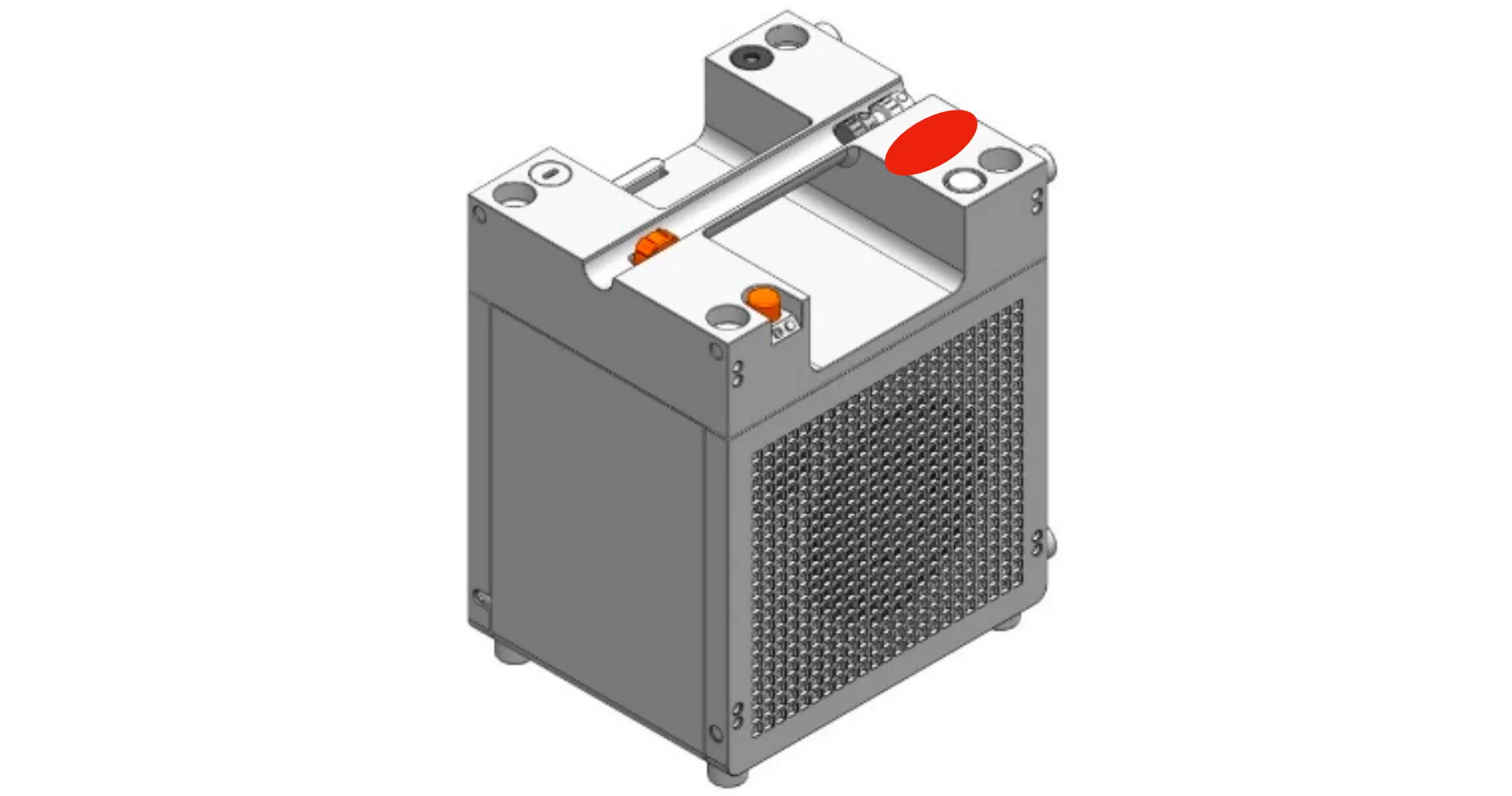
- Physical clues: The test photos show a concave handle running across the top, with a row of what appear to be rotary knobs embedded in the recess. A single quarter-inch jack sits on the upper rear panel—likely an instrument input.
Beyond these bullet points, most data in the filing is either redacted or couched in engineering jargon. There are no technical drawings of the amplifier circuit, no user manual excerpts, and no final marketing images. Nonetheless, the appearance of the KO-Amp 35 in the FCC’s public database effectively confirms that the device is moving toward release in the United States.
Why an amplifier, and why now?
Teenage Engineering has built its reputation on compact, high-style music gear. The original OP-1 workstation blended synthesis, sampling, and sequencing in a single handheld unit; more recently, the EP-series KO-II sampler expanded the company’s footprint in the sub-$500 market. A portable amplifier would fit smoothly into this ecosystem, giving artists a branded solution for live practice or spontaneous performance.
From a strategic perspective, there are clear incentives for Teenage Engineering to branch into amplification:
- Vertical integration: By offering an amp alongside samplers and controllers, the company keeps users inside the product family from input to output.
- Design synergy: A TE amp could share the same minimalist aesthetic and user-friendly interface that distinguish the brand’s other hardware.
- Market demand: The rise of street performance, bedroom production, and mobile music creation has fueled interest in lightweight, battery-powered amps and speakers.
- Competitive differentiation: Established amp manufacturers often focus on guitarists. Teenage Engineering may target electronic musicians, beat-makers, and even content creators who prize portability and design.
What the name suggests
The moniker “KO-Amp 35” invites speculation. The “KO” prefix links it to the KO-II sampler, which itself was inspired by the classic vinyl sampling workflow. The number “35” could refer to wattage, though that remains unverified. A 35-watt amp, if true, would be powerful enough for small venues and rehearsal spaces while still manageable in size. Alternatively, the figure could denote battery capacity, speaker diameter, or simply an internal product code. Without an official statement, any interpretation remains conjecture.
Design elements visible in leaked images
Although the FCC requires photographs of the device under test, the images are routinely shot at acute angles to avoid revealing too much. Even so, a few design choices peek through:
- Concave carrying handle: The handle appears to double as a control surface, borrowing a trick seen on certain industrial and medical devices where space efficiency is paramount.
- Rotary controls: At least four knobs are partially visible. These likely govern volume, EQ, gain, or onboard effects—though the exact function is anybody’s guess.
- Quarter-inch input: The solitary jack implies the amp is intended primarily for instruments rather than line-level playback. Additional I/O may be positioned out of view or on the underside.
The presence of Bluetooth opens the door to wireless audio streaming, firmware updates, or even remote control via a smartphone app. Teenage Engineering already supports iOS and Android connectivity for some of its gear, so app integration would be unsurprising.
How the KO-Amp 35 could complement existing products
Users of the KO-II sampler often pair it with external speakers or mixers. A dedicated TE amplifier could streamline that setup. Imagine plugging the KO-II directly into the KO-Amp 35, engaging a built-in compressor or delay, and performing in a park without a single AC outlet. For guitarists, the amp may offer voicing optimized for clean playback of loopers and backing tracks, differentiating it from high-gain guitar amps on the market.
The company has also teased an as-yet-unnamed mixer in earlier leaks, rumored to be bundled with the limited-edition Riddim n Ting. If that mixer materializes, an amplifier would complete a portable production chain: sampler → mixer → amp. Each element would share a common design language, forging a cohesive ecosystem akin to Apple’s hardware-software integration, but for musicians.
Reading between the FCC’s lines
FCC filings are rarely headline news, but they serve as an early warning system for observant fans. Because the commission regulates electromagnetic emissions, any device with Bluetooth, Wi-Fi, or radio transmitters must pass certification before it can be sold in the United States. Companies often request confidentiality for photos and manuals up to a specified release date, yet some visual evidence is still mandated. As a result, tech watchers scour the database for undeclared gadgets months before formal announcements.
In this case, the timing of the KO-Amp 35 filing coincides with industry chatter that Teenage Engineering plans to expand its product offerings during the summer trade-show season. Whether the official unveiling happens at Superbooth, NAMM, or via an online event remains to be seen, but the FCC paperwork suggests the timeline is tightening.
Context within the broader amplifier market
Portable amplifiers are enjoying renewed popularity, driven by buskers, podcasters, and social-media creators who need self-contained sound systems. Brands like Roland (with its Cube series), Yamaha (THR), and Boss (Katana Mini) dominate the category. Teenage Engineering’s entry could differentiate itself through industrial design, user interface, and cross-compatibility with the EP lineup.
Where competitors often mimic the appearance of vintage guitar heads or hi-fi radios, TE could leverage its Scandinavian minimalism to produce an object that doubles as decor. The company’s history with non-traditional materials, such as the aluminum shell of the OP-1 field and the recycled plastics in certain Pocket Operators, raises curiosity about what chassis the KO-Amp 35 will employ.
Imagem: Terrence O
Potential feature wishlist
Until the company speaks publicly, any proposed spec sheet is purely hypothetical. Still, based on Teenage Engineering’s past work and the limited data from the FCC, musicians might hope for:
- Multi-mode Bluetooth: low-latency protocols for instrument playback and standard audio streaming.
- USB-C charging: aligning with modern power standards and possibly supporting power-bank operation.
- Onboard DSP: reverb, delay, or compression tailored to electronic instruments.
- Daisy-chain support: the ability to link multiple amps for wider stereo imaging.
- Companion app: remote EQ tweaking, firmware upgrades, and preset management.
Whether any of these features make it into the final hardware is unknown, but Teenage Engineering’s track record suggests at least one unexpected flourish.
What happens next
With the FCC hurdle apparently cleared, the KO-Amp 35 is effectively approved for sale in the United States. The remaining steps typically include finalizing production tooling, ramping up manufacturing, and planning distribution. Retail partners will need demo units, marketing assets, and training. If history is a guide, the company might tease the product on social media first, showcasing a cryptic animation or posting a single stylized photograph. Enthusiast forums will dissect every pixel, and preorders could open within days of the official reveal.
Pricing will be crucial. Teenage Engineering’s hardware frequently commands a premium, but the EP series has aimed for a more accessible bracket. If the KO-Amp 35 lands below the psychological $400 threshold, it could attract not only existing TE fans but also musicians who have never touched the brand’s instruments. Conversely, a higher price tag may position the amp as a lifestyle object in line with the company’s collaborations in home audio and consumer electronics.
Conclusion
The KO-Amp 35 FCC filing may be light on specifics, yet its implications are significant. It signals Teenage Engineering’s intent to close the loop between creation and amplification, adding another link to its growing chain of tactile, portable music tools. For the moment, musicians and gear enthusiasts must content themselves with a handful of grayscale photos, a product code, and the tantalizing promise of Bluetooth-enabled, battery-powered sound. But if Teenage Engineering’s past surprises are any measure, the final launch could redefine expectations for what a small amplifier can look like—and how it can integrate into modern, mobile music-making workflows.
FAQ
What is the KO-Amp 35?
According to an FCC filing, the KO-Amp 35 is an unannounced, battery-powered amplifier from Teenage Engineering that includes Bluetooth connectivity and belongs to the company’s EP-series product line.
When will the KO-Amp 35 be released?
The FCC approval indicates that the device is close to launch, but Teenage Engineering has not announced an official release date.
How powerful is the amplifier?
The “35” in the name could imply 35 watts of power, but that interpretation is unconfirmed. No official specifications have been published.
Does it support wireless audio?
Yes. The FCC documentation lists Bluetooth, suggesting the amp can handle wireless streaming or control.
Will it come in different colors?
A model-difference statement in the filing mentions multiple variants, which typically means several color options.
What instruments can be connected?
The photos show a quarter-inch input jack, so guitars, synths, samplers, and other instruments with standard instrument cables should be compatible.
How much will it cost?
No pricing information is available. Historically, Teenage Engineering’s EP-series devices fall in the mid-range price bracket, so the amp may follow a similar strategy.