Subtle back-panel lights could become the Pixel’s next standout trick
The latest beta build of Android is doing what prerelease software so often does: hinting at hardware nobody has seen yet. Hidden strings inside Android 17 Beta 4 reference a still-unannounced feature called Pixel Glow, and the language strongly suggests that Google’s next flagship phone will ship with a fresh set of notification lights somewhere on the rear of the device. If the code proves accurate, the Pixel 11 line could be about to borrow—though in typical Google fashion, soften—one of the flashiest ideas from the world of dedicated gaming phones: RGB illumination.
From “Light animations” to “Pixel Glow”
Back in the second beta of Android 17, developers first noticed a cluster of resources labelled “light animations.” Those breadcrumbs were intriguing but vague, offering no context beyond a codename (“Orbit”) and a suggestion that something colorful might happen during notifications. Beta 4 rewrites those references under the public-facing name Pixel Glow and, crucially, spells out what the feature does: deliver “subtle light and color” on the back of a handset while it lies face down.
The strings outline three principal use cases:
- Incoming calls from favorite contacts.
- Visual feedback when interacting with Gemini—Google’s AI assistant.
- General hands-free alerts while the screen is hidden.
Every mention of Pixel Glow is paired with that word “subtle,” a reminder that Google is unlikely to coat its next phone in a neon light show. But the documentation also includes an unambiguous hardware requirement: “The device must have hardware lights.” Software cannot fake that. If Pixel Glow reaches consumers, the physical components to drive those tiny LEDs have to be inside new devices.
Why add rear lights at all?
Notification LEDs were once standard fare on Android phones, glowing in time with missed calls or unread messages. As bezels shrank, manufacturers dropped the front-facing light to save space. Google’s own solution was Flash Notifications in Android 14, which briefly pulses the camera flash or a white screen to grab attention. That method is effective but clunky, especially in low-light environments where a bright strobe can be intrusive.
Pixel Glow appears to tackle the same problem with more nuance. When the phone is placed face down—a habit Pixel owners already use to silence ringtones—the back panel is free real estate. Diffuse colored LEDs can create an ambient glow that alerts users without lighting up an entire room. Think of a bedside table at night: instead of a sudden camera flash, you get a soft wave of color along the camera bar or under the glass.
Lessons from gaming phones
Phones aimed at gamers, such as the Asus ROG series or Nubia RedMagic line, have sported addressable RGB strips for years. Those implementations, however, are usually bold, customizable light shows that can strobe in sync with music or match on-screen action. Google’s documentation points toward something gentler, consistent with the company’s material design philosophy and its preference for minimalist hardware.
The Pixel team may also borrow a trick from smart speakers like the Nest Hub or Nest Mini, which deploy understated LED indicators that gently fade in and out during voice interactions. Extending that design language to smartphones could create a coherent Google hardware family: the same rainbow gradient that dances across the status bar in Gemini could shimmer, faintly, on the back of a new Pixel.
Gemini gets a starring role
A notable portion of the code is reserved for AI integration. One string explicitly links Pixel Glow to “hands-free interactions using visual feedback” while “speaking with Gemini.” That makes sense. Conversational AI often involves waiting: you talk, the assistant thinks, then it responds. A pulsating strip of color is a quiet way to show the device is listening or processing without lighting up the display or forcing users to watch a loading spinner.
Google has leaned into Gemini branding at every opportunity, from web integrations to productivity apps. Anchoring the AI experience to distinctive physical hardware could give the Pixel line a marketing hook Apple or Samsung cannot easily mimic without visible redesigns.
Where could the LEDs live?
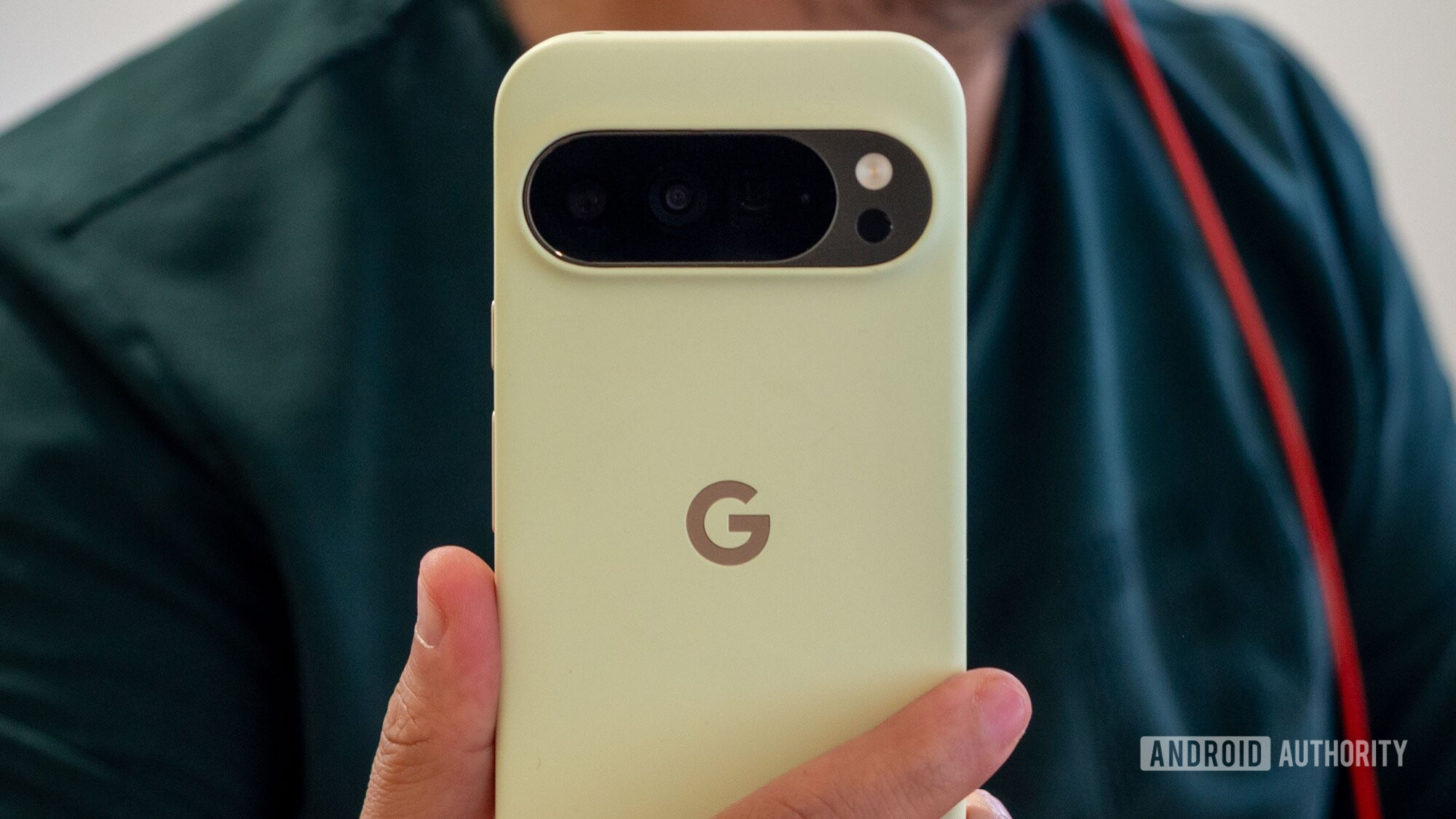
Leaked CAD renders of the Pixel 11—while unofficial—show the familiar horizontal camera bar stretching across the rear. That bar already houses multiple sensors and the traditional flash. Concealing a set of low-power RGB LEDs beneath the opaque portion of that module would be relatively straightforward. When inactive, nothing new would be visible; when Pixel Glow triggers, light would diffuse through plastic or glass slits, similar to notification bars on some Bluetooth speakers.
Another possibility is a slim perimeter light around the camera lenses themselves, echoing the ring flashes found on professional macro photography rigs. But the emphasis on subtlety argues for a broader, softer effect rather than a concentrated spotlight.
Compatibility with older phones
The hard-coded line stating that “the device must have hardware lights” effectively rules out back-porting the feature to current Pixels. Even if Google shipped final Android 17 to existing Pixel 8 or Pixel 7 owners, the absence of dedicated LEDs would leave Pixel Glow grayed out in settings. That restriction mirrors how Spatial Audio with head tracking or the Motion Sense radar were limited to hardware that physically supported them.
Imagem: Internet
How subtle is “subtle”?
Google’s repetitive use of that adjective may be more than just marketing tone. Regulatory guidelines in some jurisdictions place limits on how bright or distracting rear-facing lights can be, especially while driving. A soft glow that diffuses across a matte surface should pass muster without tempting accusations of light pollution or safety hazards.
Battery impact is another concern. RGB LEDs are efficient, but if they sit behind tinted glass they may need higher intensity to be visible. Google could mitigate drain by limiting Pixel Glow to short bursts, dim output levels, or a single white LED that flickers through a diffraction grating to create faux colors. Without schematics it is impossible to know, yet no string in Beta 4 references granular color settings; the experience may be fixed rather than user-customizable.
What comes next
Google I/O has come and gone without official mention of Pixel Glow, meaning any reveal is likely tied to the hardware launch cycle that traditionally peaks in early autumn. If LED components must be baked into the phone, Google has every incentive to trumpet the feature on stage—not merely as a software tweak but as a justification for the inevitable “new design” slide.
Until then, developers will continue dissecting monthly betas. The history of Android teardowns is mixed: some hints accurately forecast shipped features, while others document experiments that never leave Google’s labs. Yet the presence of marketing-ready copy—and a formally branded name—usually indicates the idea is far along.
One final question remains: will consumers embrace back-panel indicators in 2024? The smartphone world has oscillated between maximalist and minimalist trends. A decade ago, blinking LEDs were everywhere. Then monochrome always-on displays took their place. Google seems to believe there is room for a carefully implemented middle ground. If that bet pays off, Pixel Glow could become as recognizable as the two-tone Pixel paint jobs of yesteryear.
Key takeaways
- Android 17 Beta 4 references a new feature named Pixel Glow.
- The strings describe “subtle light and color” alerts when the phone is face down.
- A hardware requirement for rear LEDs suggests new components in the Pixel 11 line.
- Use cases include favorite-contact calls and real-time feedback while speaking to Gemini.
- No existing Pixel model is expected to gain the feature retroactively.
FAQ
What is Pixel Glow?
Pixel Glow is an unreleased notification system discovered in Android 17 Beta 4. It appears to use small LEDs on the back of a phone to provide discreet visual alerts when the device is placed face down.
Will current Pixel phones support Pixel Glow?
Unlikely. The code states that compatible devices “must have hardware lights,” and existing Pixel models do not include rear RGB LEDs beyond the camera flash.
How is Pixel Glow different from Flash Notifications?
Flash Notifications rely on the camera flash or a white screen to signal incoming alerts. Pixel Glow would use colored rear lights, offering a softer, less intrusive effect.
Is Pixel Glow customizable?
The beta strings do not mention user-defined colors or patterns. Google emphasizes “subtle lights,” implying the effect might be fixed or limited to a few presets.
When will Pixel Glow be officially announced?
Google has not confirmed the feature. If tied to new hardware, it will likely debut alongside the Pixel 11 series, expected in the latter half of the year.