

A Bold New Look for Wireless Audio: Insta360 Unveils Mic Pro with Customizable E-Ink Displays
Insta360 has used the 2026 NAB Show in Las Vegas to preview its next piece of creator hardware, the Mic Pro. The forthcoming wireless audio system departs from the company’s earlier minimalistic designs by putting a circular E-Ink color screen front and center on each transmitter. Instead of hiding the microphone under clothing or behind props, the Mic Pro encourages users to wear it like a badge—complete with personalized graphics, logos, or artwork.
From Invisible to Attention-Grabbing
Only a year ago, Insta360’s first wireless microphone package—the Mic Air—focused almost entirely on discretion. Roughly the size and shape of an AirTag, those transmitters were meant to disappear into a shirt fold or slip into a lapel. With the Mic Pro, the company is moving in the opposite direction. The built-in E-Ink screen transforms each transmitter into a miniature billboard that can display brand marks, show logos, or even simple photos.
Visibility is no longer treated as a drawback. For on-camera personalities who already incorporate wearable tech, the Mic Pro’s design is a form of self-expression and easy identification on crowded sets. Rather than dealing with tape, magnets, or hidden cables, creators can simply clip the device on and make it part of the outfit.
How the E-Ink Screen Works
Insta360 has opted for E-Ink technology—a display type best known from e-readers—because it consumes very little power and remains visible even under bright studio lights or direct sunlight. Once an image is loaded onto the transmitter, it stays in place without continuously draining the battery. The circular screen is also color-capable, offering a richer palette than traditional monochrome E-Ink panels.
Because the company has not yet published a full specification sheet, exact screen resolution or color depth details remain under wraps. However, the marketing emphasis on logo display indicates that crisp, clear graphics are a priority.
Three-Mic Array and On-Board AI
A notable feature underscoring the Mic Pro’s professional intent is its three-microphone array. By using multiple capsules, the transmitter can capture a broader acoustic field and apply computational processing for cleaner audio. Insta360 has paired the array with a dedicated AI processor aimed at noise reduction.
AI-based audio enhancements typically analyze incoming signals in real time to distinguish voices from background sounds—traffic, wind, or crowd noise, for example. The processor can then suppress unwanted frequencies before they reach the recording device. In practice, this translates to fewer retakes and less time spent cleaning dialogue in post-production.
Direct Integration with Insta360 Cameras
In keeping with the company’s ecosystem approach, the Mic Pro can beam audio straight to many of Insta360’s cameras without a traditional receiver. That simplifies run-and-gun shoots, letting vloggers or documentarians travel lighter. A receiver unit is still part of the kit for use with smartphones, tablets, laptops, or third-party cameras, but Insta360 owners gain a plug-and-play advantage.
This direct connection capability mirrors the convenience offered by last year’s Mic Air, but the Pro model adds its own slate of selling points: the multi-mic array, the E-Ink screen, and internal recording—features that collectively aim to tempt both new users and those looking to upgrade.
Built-In Backup Recording
Anyone who has endured wireless dropouts or interference knows the relief that dual-system sound can provide. Insta360 addresses this pain point by letting each Mic Pro transmitter capture audio locally, independent of the wireless link. Should a transmitter momentarily lose its connection or the camera’s storage card fail, the on-board file becomes a lifesaver.
While official specs have yet to list the capacity or file format, onboard recording typically produces a high-quality WAV or similar file that can be synced in post. This redundancy is especially valuable for wedding videographers, journalists, or live-event streamers, where retakes are impossible.
Target Users: Creators, Streamers, and Production Teams
Wireless microphones were once the purview of broadcast studios and film sets, but social platforms have widened demand for easy-to-use audio solutions. The Mic Pro’s show-it-off aesthetic is clearly aimed at:
- Live Streamers: Twitch and social video personalities can display channel art directly on the mic.
- Corporate Presenters: In-house video teams can brand mics with company logos for a polished look.
- Interviewers and Podcasters: Quick identification of who is speaking helps in multi-guest setups.
- Event Videographers: E-Ink screens can show staff titles or event names for easy backstage coordination.
By focusing on appearance in addition to performance, Insta360 hopes to differentiate the Mic Pro in a crowded wireless market where many products look almost interchangeable.
NAB Show Debut and Market Expectations
The National Association of Broadcasters (NAB) trade show has long served as a launchpad for production gear, from cameras to capture cards. Insta360’s decision to tease the Mic Pro at NAB positions the product squarely in front of broadcast professionals, even as its feature set appeals to independent creators.
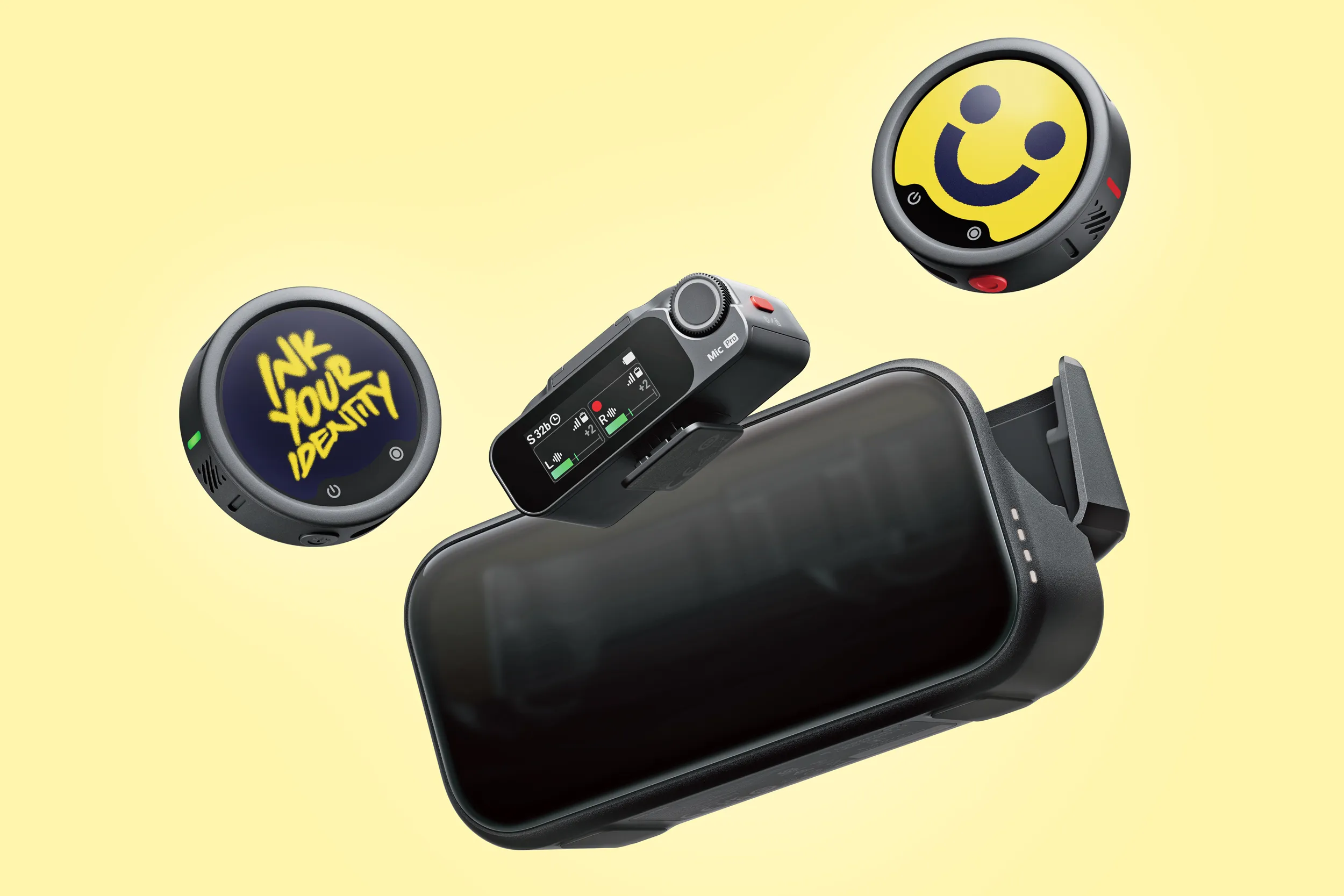
Imagem: Insta
Although no firm release date or pricing has been revealed, the company has promised a “global launch” later in 2026. Based on standard product cycles, additional information may surface closer to the summer, with shipping potentially aligning with peak content-creation months in the fall.
Points Still Unknown
While the early announcement highlights several headline features, there are notable gaps that industry watchers will be eager to fill:
- Battery life: E-Ink displays are power-efficient, but the three-mic array and AI processor could increase drain.
- Wireless range and frequency band: Professional sets often exceed 100 meters under ideal conditions.
- Internal storage capacity: Longer shoots require ample space for backup files.
- Pricing tiers: Will Insta360 offer bundles or single transmitters for multi-talent setups?
Absent these details, comparisons with well-known systems from competitors will have to wait.
Conclusion
With the Mic Pro, Insta360 appears ready to reimagine how wireless microphones fit into the visual identity of a production. By flipping the script—turning the transmitter into a displayable accessory rather than something to conceal—the company is carving out a niche that fuses audio technology with branding opportunities. Whether the gamble resonates with professionals and hobbyists alike will depend on final specs, pricing, and real-world performance, but the concept has already succeeded in drawing attention on the NAB Show floor.
FAQ
What is Insta360 Mic Pro?
The Mic Pro is an upcoming wireless microphone system featuring a three-microphone array, on-board AI noise reduction, and a circular E-Ink color screen that can display custom logos or images.
How is it different from Insta360’s earlier Mic Air?
While the Mic Air emphasized stealth with its tiny form factor, the Mic Pro encourages visibility through its customizable E-Ink display, adds a more advanced microphone array, and includes internal recording for backup.
Can the Mic Pro work without a receiver?
Yes. Like its predecessor, the Mic Pro can transmit audio directly to many Insta360 cameras. A traditional receiver is still available for other recording devices such as smartphones or laptops.
Does it record audio internally?
Each transmitter can capture audio locally, creating a safety track in case the wireless connection fails or external recording equipment encounters problems.
When will it be available?
Insta360 has stated that the Mic Pro will see a global release later in 2026, but an exact launch date and pricing have not yet been announced.
Who is the target audience?
Content creators, live streamers, interviewers, event videographers, and broadcast professionals who want both high-quality audio and a visible, brand-friendly microphone solution.
What information is still missing?
Key details such as battery life, wireless range, internal storage size, and price have not yet been disclosed. Further announcements are expected closer to the commercial launch.
