New Universal Search Bar Brings Google’s Reach Directly to Windows Desktops
Google has rolled out a new desktop search tool for Windows, promising faster access to online information and personal files without ever opening a browser. The application, which was in limited testing throughout the past year, is now available worldwide in English and works on any computer running Windows 10 or later.
A Familiar Concept Reimagined for Windows
The idea behind Google’s desktop search bar is simple: press a keyboard combination, type a query, and see results in real time. macOS users will recognize similarities to Spotlight, the built-in Mac search feature. On Windows, Microsoft already offers its own taskbar search and—more recently—Copilot integration. Google’s entry, however, brings its powerful web index and cloud services directly to the desktop in a streamlined interface.
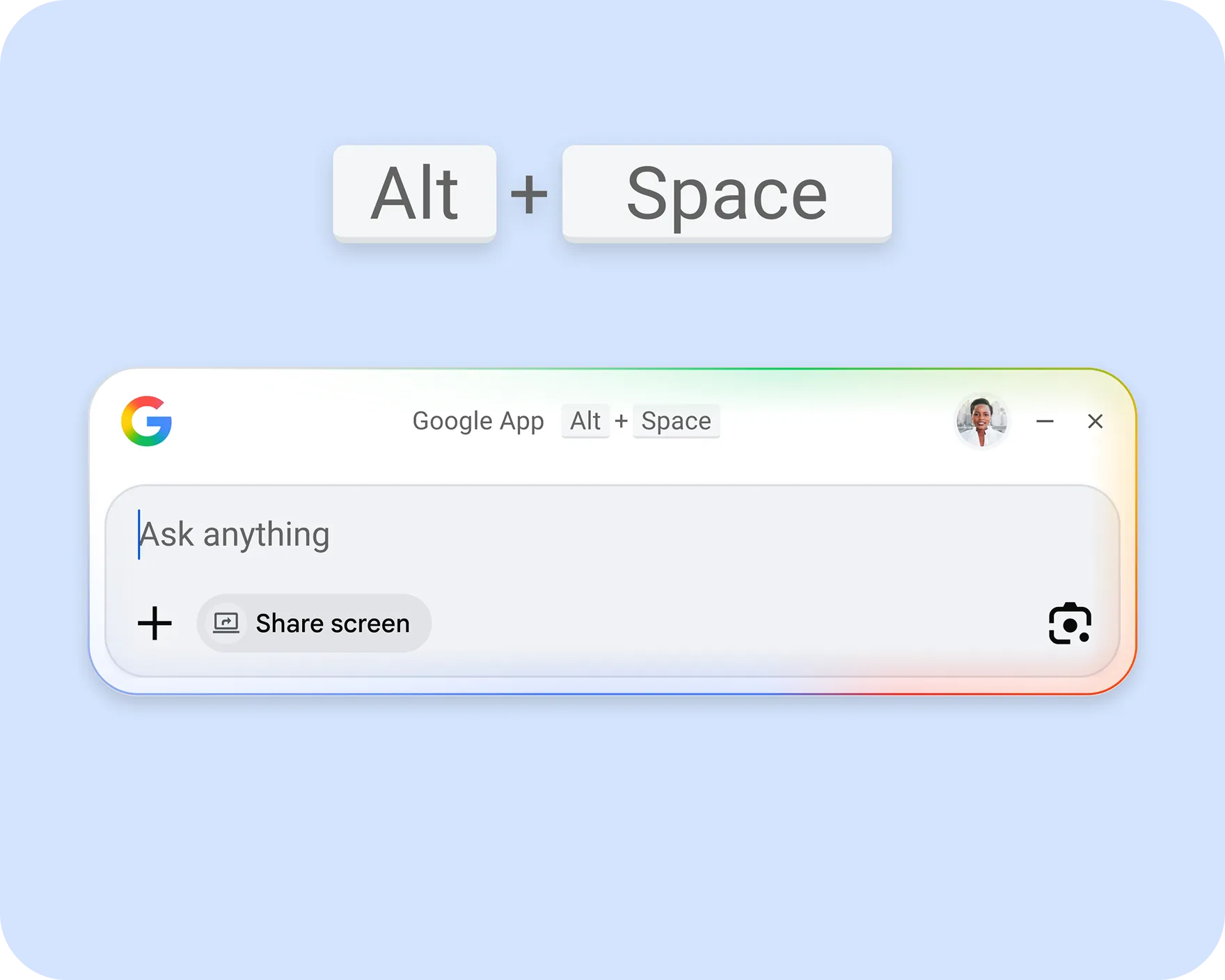
To activate the new bar, users press Alt + Space. A minimal search window appears in the center of the screen, offering a single field where text or image queries can be entered. Results display almost instantly, updating as keywords change. According to Google’s release notes, the design goal was to reduce friction between “I wonder” and “I found it,” whether the answer lives online, in a local folder, or inside Google Drive.
Key Features and How They Work
- Unified Results: By default, the search bar returns a blended list called “All,” mixing web pages, local files, and cloud documents. Users can narrow the view to “Images” for web-sourced pictures or “AI Mode” for generative responses powered by Google’s large language models.
- Cloud and Local File Access: Because the app authenticates with a Google account, Drive files and shared documents appear alongside items stored on the hard drive. Contextual information—such as last-modified date or folder location—is provided to help identify the right file at a glance.
- Google Lens Integration: An icon inside the search bar allows users to drag an image or screenshot directly into Lens. The tool can recognize objects, translate text, or surface visually similar results from the web.
- Screen Sharing for Queries: A built-in screen share button lets users highlight a portion of their desktop and ask “What’s on my screen?” The feature routes the snapshot through Google’s servers, where AI models attempt to identify or explain the content.
- Privacy Controls: During setup, the application requests permission for local indexing but emphasizes that file metadata remains on the device unless a document is explicitly opened in Drive. Users can disable specific folders or file types within the settings menu.
Comparing Google’s App to Existing Windows Search Solutions
Windows has no shortage of search utilities. The built-in taskbar field taps Bing and local indexing, PowerToys Run offers a Spotlight-like overlay, and third-party applications such as “Everything” are popular among power users. Google is betting that a single pane capable of searching the company’s vast web index, Drive, and local files will provide a compelling alternative, especially for people whose workflow already lives inside Google Workspace.
Microsoft’s Copilot—recently integrated into Windows 11—also blends local and web queries, with generative AI features in tow. However, Copilot responses rely on Bing and OpenAI models, whereas Google’s bar leverages the company’s own AI stack. Early testers report that conversational answers in “AI Mode” feel similar to responses in the web version of Gemini, though the desktop app focuses more on quick summarization than long-form dialogue.
Installation and System Requirements
The application is a standalone download from Google’s website and weighs roughly 150 MB. After installation, users sign in with their Google credentials to enable Drive integration. The company recommends keeping Windows up to date to ensure compatibility with security features, but there is no separate subscription fee; the tool is free for personal and corporate Google accounts alike.
Offline functionality remains limited. While local files can still be discovered without an internet connection, web results obviously require access. AI Mode also depends on live servers to process natural-language queries.
Unanswered Questions About macOS and Linux Support
For now, Google is keeping the desktop search bar exclusive to Windows. When asked about expansion plans, the company’s spokesperson said only that user feedback will influence future platform decisions. Rumors have circulated that Google is developing a dedicated Gemini application for macOS, which might incorporate similar quick-access search features. If released, that product would compete directly with chatbots from Anthropic and OpenAI that already run natively on Apple computers.
Linux users remain in the dark, though the open-source community has historically filled gaps with unofficial ports of Google utilities. Whether an official version arrives may depend on enterprise demand; many corporate developers operate on Linux machines where web and file search can become fragmented across multiple tools.
Imagem: Google
The Strategic Play Behind Google’s Move
Bringing a universal search bar to Windows accomplishes several objectives for Google:
- Increased Engagement: By inserting itself into the daily flow of desktop usage, Google gains additional touchpoints that bypass the browser’s address bar—a space contested by both Bing and privacy-focused competitors.
- Drive Adoption: Tight integration with Drive could entice Windows users who rely on Office files stored locally to migrate more content into Google’s cloud ecosystem.
- Data Refinement: Each query and interaction helps refine Google’s AI models. Although personal file paths stay local, anonymized usage metrics feed back into product development.
- Competitive Pressure: The move challenges Microsoft’s strategy of weaving Bing and Copilot deeper into Windows, highlighting the search wars that have migrated from browsers to operating systems themselves.
Early Reaction From Testers
During the closed beta, early adopters praised the bar’s speed and minimal design, noting that keystrokes convert to results with little perceptible lag. Some pointed out limitations: the tool does not yet index email content stored in Outlook’s PST files, and advanced file filters (such as “modified last week”) are missing. Google says updates are planned on a rolling basis, delivered through an auto-update mechanism that checks for new builds daily.
IT administrators can deploy the application through standard Windows installer packages (.msi), with group-policy settings to restrict certain features like screen sharing. A separate enterprise privacy guide outlines how administrators can prevent users from enabling AI Mode if corporate policy forbids external data processing.
What It Means for Everyday Windows Users
For most people, the new search bar may simply represent one less step in finding a document or launching a quick web search. Instead of opening a browser, logging into Drive, or digging through File Explorer, a single keyboard shortcut centralizes those actions. The true test will be sustained adoption: many Windows users are accustomed to the Start menu or pinned browser tabs. Convincing them to learn Alt + Space could hinge on whether results feel meaningfully better than what they already get.
At the same time, the tool’s success—or failure—could signal how aggressively Google intends to integrate AI services into operating systems it doesn’t control. While Android and ChromeOS are under Google’s umbrella, Windows remains the world’s most widely used desktop platform. Embedding search and AI capabilities there avoids the barriers of convincing users to switch operating systems entirely.
Looking Ahead
Google’s next steps may involve expanding language support and adding enterprise-grade features such as indexing network drives or intranet pages. The company is also expected to fine-tune AI Mode with more conversational capabilities, perhaps mirroring features seen in the web version of Gemini Advanced.
For now, the new search bar delivers a lean, focused experience: it is fast, uncluttered, and harnesses Google’s strengths in information retrieval. Whether that is enough to nudge users away from Microsoft’s built-in solutions remains to be seen, but one thing is clear—desktop search is becoming the next battleground for tech giants vying to own the user’s first query of the day.
FAQ
- Is the Google desktop search bar free?
Yes. The application is a free download and there are no subscription costs, though some AI features require a Google account. - Which versions of Windows are supported?
The tool works on Windows 10 and Windows 11. Older versions are not officially supported. - Does the app replace Windows Search or Copilot?
No. It operates independently, allowing users to keep using Microsoft’s built-in search or Copilot alongside Google’s bar. - Can I disable web or AI results and search only local files?
Yes. Settings provide toggles to limit queries to local content, exclude Drive, or turn off AI Mode entirely. - Will there be versions for macOS or Linux?
Google has not confirmed future platforms. Reports suggest a separate Gemini application is being tested for macOS, but official details remain unavailable.