Deadly Incident Prompts Renewed Warning Over Faulty Portable Chargers
The U.S. Consumer Product Safety Commission (CPSC) and accessories maker Casely are once again urging the public to stop using a specific model of the company’s wireless power banks after a new wave of overheating incidents—including a fatal explosion—surfaced over the past year. The latest safety notice revives a recall first issued in April 2025 and underscores the enduring hazards posed by aging or defective lithium-ion batteries.
Why the alert is back on the front page
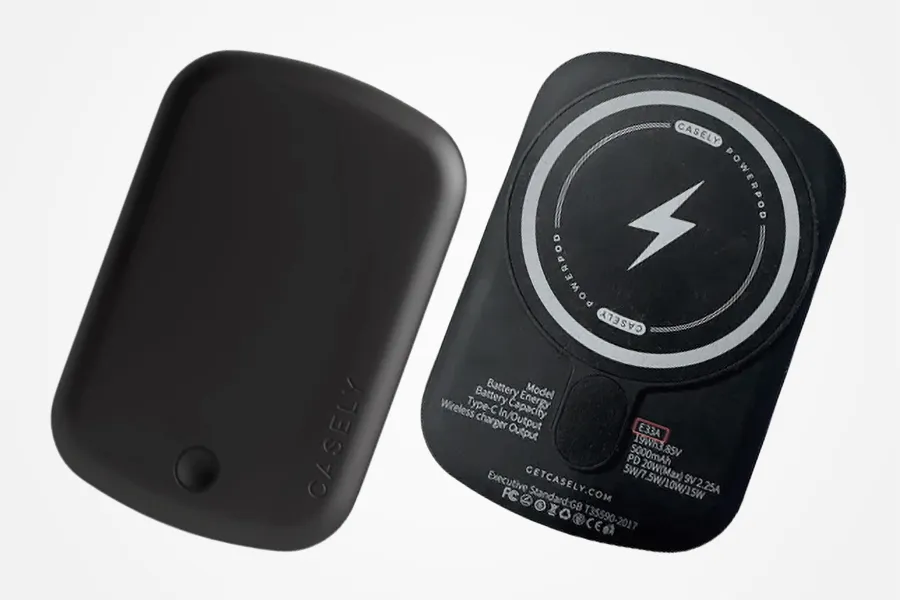
Casely’s 5,000mAh Power Pods portable chargers, identified by the model number E33A and the Casely logo engraved on the front, were originally pulled from the market after 51 reports of batteries swelling, smoking, or bursting into flames. Six people suffered minor burns during that first round of incidents.
Since the recall, however, an additional 28 problems have been documented, according to data provided to the CPSC. Those reports include:
- A mid-flight battery explosion that forced airline crew to deploy fire-containment equipment.
- Property damage in several homes where the devices ignited while charging.
- The most severe case: a 75-year-old woman in New Jersey who sustained second- and third-degree burns. She later died from complications related to her injuries.
The renewed advisory highlights a painful truth: even when a product recall is formally announced, thousands of units often remain in circulation, tucked into backpacks, airplane carry-ons, desk drawers, and purses. If owners miss the initial notice—or ignore it—risk persists long after store shelves are cleared.
How to recognize the recalled charger
All versions of the Power Pods wireless power bank share the following features:
- 5,000mAh capacity
- Qi wireless charging surface on one side and a USB-C port on the edge
- Casely name stamped or engraved on the front face
- Model number E33A printed on the back casing
Units were sold online through the manufacturer’s website, through Amazon, and via several third-party e-commerce storefronts from March 2022 to September 2024. Retail pricing ranged from $30 to $70 depending on color and bundle options.
What to do if you own one
Officials are clear: stop using the charger immediately. Remove it from power outlets, laptops, or any device it might be charging, and follow safe-disposal protocols. The company is offering a no-cost replacement and has streamlined the claims process:
- Photograph the model number on the back of the power bank.
- Write the word “recalled” and today’s date on the device with permanent marker.
- Take a second photograph showing the marked device.
- Upload both images through the claim submission portal on Casely’s recall webpage.
- Select a preferred replacement color and confirm shipping details.
Users who wish to dispose of the battery rather than obtain a replacement should never toss it in household garbage or municipal recycling. Instead, locate a hazardous-materials drop-off center or a certified e-waste facility that accepts lithium-ion batteries. Many town transfer stations and specialty electronics stores operate free collection programs but always call ahead; some retailers prohibit damaged batteries because of ignition risk.
Lingering battery dangers on planes
The aviation incident linked to the power bank illustrates why airlines continue to impose stringent rules on portable power devices. Lithium-ion batteries can enter thermal runaway when internal components fail, releasing flammable electrolyte and reaching temperatures in excess of 1,000°F (538°C). In a high-altitude cabin environment, even a small fire can threaten passenger safety and force emergency landings.
The Federal Aviation Administration permits batteries under 100 watt-hours in carry-on luggage but not in checked baggage. Casely’s 5,000mAh capacity equals roughly 18.5 Wh, well below that threshold, so many flyers might have assumed the charger was harmless. The new data serve as a reminder that watt-hour limits do not negate the importance of build quality, age, or recall status.
Recalls in the lithium-ion era
Problems are not unique to one brand. Recent years have witnessed waves of recalls for products ranging from electric scooters and e-bikes to smartphones and smartwatches. High-profile examples include:
- The 2016 smartphone recall that led airlines worldwide to ban a flagship handset from all flights.
- Multiple home robotics devices that overheated while docked on charging stations.
- Hoverboards recalled after hundreds of fires in garages and bedrooms.
In most cases, defects arise from sub-standard battery cells, inadequate thermal management, or quality-control lapses during manufacturing. Once millions of units ship globally, tracing individual failures becomes complex, and recalls often stretch across years as new incidents come to light.
How regulators approach a reannounced recall
When the CPSC labels a recall “reannounced,” it usually signals one of two realities: either the number of additional incidents is climbing, or public response to the original notice was insufficient. By reissuing the warning, the agency taps fresh media coverage and social-media algorithms, hoping to reach owners who were missed or who chose not to act the first time.
Imagem: Casely
Manufacturers typically cooperate, both to limit liability and to rebuild consumer trust. Casely, for its part, says it has redesigned later power-bank models with improved battery-management systems and higher-grade cells. Those newer products are not covered by the recall, but the company encourages all customers unsure of their model number to cross-check serial data or reach out to live customer support.
Protecting yourself from battery hazards
Experts recommend a few simple habits for any device powered by lithium-ion cells:
- Avoid charging on flammable surfaces such as bedding or sofas.
- Use only cables and adapters rated for the device’s power draw.
- Store batteries at room temperature; extreme heat degrades cell chemistry.
- If you see bulging, smell chemical odors, or hear hissing, move the device away from combustibles and monitor it in a metal or ceramic container until it cools.
- Stay current on recall databases maintained by the CPSC, Transport Canada, the European Union’s RAPEX system, or other regional safety authorities.
With global demand for portable electronics surging—forecast to exceed eight billion connected devices this decade—battery safety will remain a central consumer-protection issue. The reemergence of Casely’s Power Pods recall is a sobering reminder: a single overlooked gadget can pose outsized danger.
The bottom line
If you bought a Casely Power Pods wireless charger between spring 2022 and autumn 2024, stop using it immediately, verify the model number, and follow the replacement or disposal instructions. Even if your unit has performed flawlessly so far, the statistics behind the recall demonstrate that catastrophic failure can occur without warning. Responsible disposal or exchange protects not only you and your household but also airline passengers, sanitation workers, and recycling staff who might unknowingly come into contact with the defective battery.
FAQ
How can I tell if my power bank is part of the recall?
Look for model number E33A on the back and the Casely name on the front. The capacity is 5,000mAh, and the device offers Qi wireless charging. If those details match, your charger is included.
Is the replacement really free?
Yes. Casely covers shipping both ways. You will not be asked to pay restocking or processing fees.
Can I keep the recalled unit if I promise not to charge it?
No. The CPSC advises that recalled lithium-ion products be removed from service entirely because internal damage can trigger fires even when the device is off or stored.
What should I do if my power bank is swelling or hot right now?
Unplug it carefully, place it on a non-flammable surface such as a concrete floor or metal tray, and move combustible objects away. Do not puncture or douse it in water. Contact local fire authorities if smoke or flames appear.
Where can I recycle damaged lithium-ion batteries?
Check municipal hazardous-waste facilities, certified e-waste recyclers, or call-ahead programs at electronics retailers. Never dispose of damaged batteries in household trash or curbside recycling bins.
Does the recall affect Casely’s newer power banks?
No. Only the E33A model purchased between March 2022 and September 2024 is subject to the notice. Newer versions use updated components and are not part of the safety alert.