Luxury Meets Tech: Google and Gucci Plot 2027 Debut of AI-Driven Eyewear
Google’s long-running ambition to fuse computing power with everyday vision is preparing for a high-fashion makeover. The search giant is working with Italian luxury house Gucci on a pair of artificial-intelligence smart glasses that could arrive as early as 2027, according to people familiar with both companies’ roadmaps. The move underscores a growing recognition in Silicon Valley that technical prowess alone will not persuade consumers to place gadgets on their faces; style and brand prestige matter every bit as much as processor speed or display resolution.
A second chance after Google Glass
Google’s first experiment with wearable eyewear, Google Glass, was introduced in 2013 and quietly discontinued in its consumer form after privacy complaints, limited functionality, and its unmistakably “techy” look earned wearers the nickname “Glassholes.” The product never shook its image as a prototype. This time, executives are determined to avoid the same fate by taking fashion—rather than engineering— as the starting point.
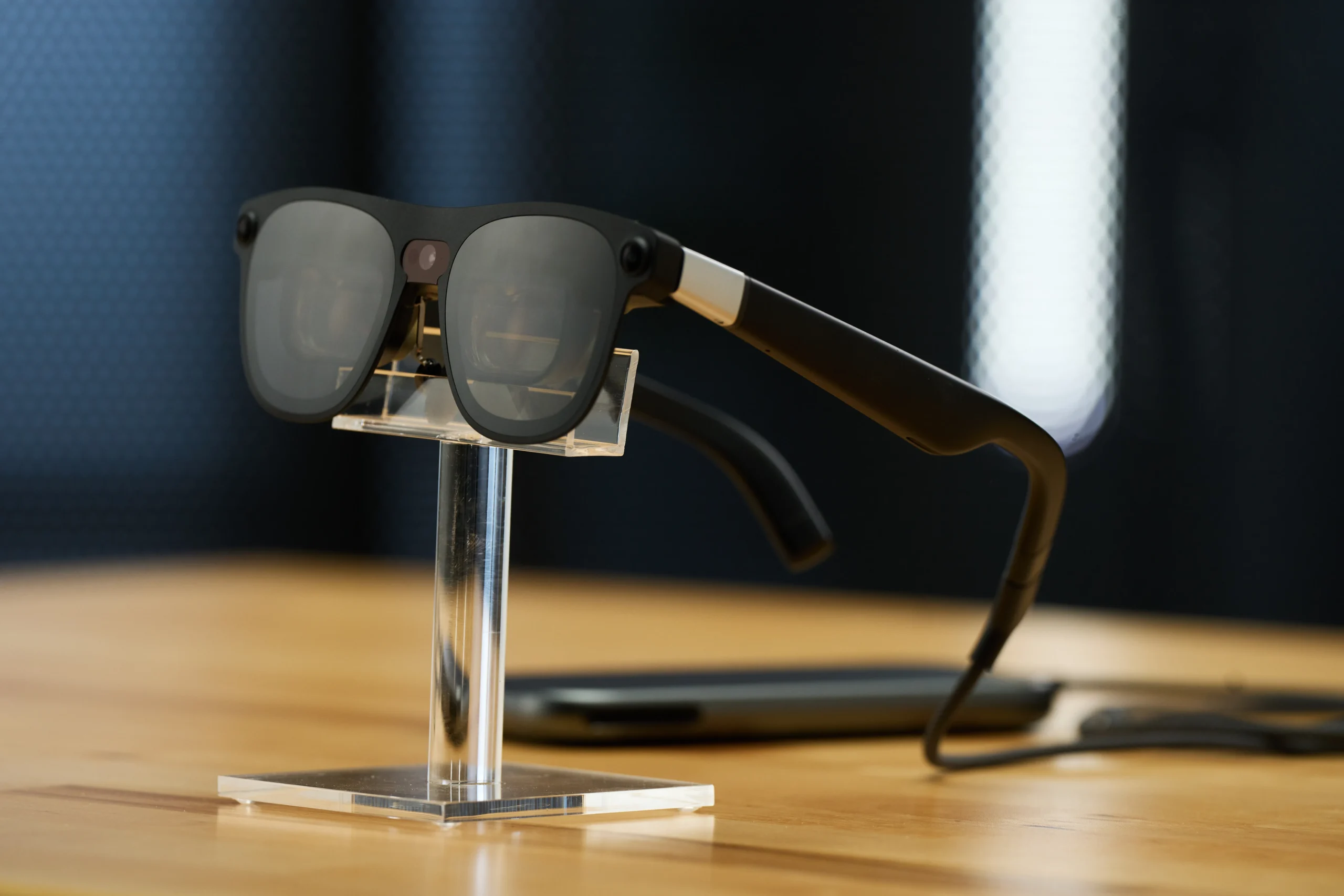
The new device being co-developed with Gucci is separate from Project Aura, Google’s in-house Android extended-reality (XR) glasses scheduled to appear later this year. Project Aura frames adopt a minimalist black-plastic aesthetic reminiscent of Meta’s Ray-Ban collaboration and will act as a reference design for software developers. The Gucci edition, however, is intended for a mass-market retail launch and will feature premium materials, custom colorways, and branded packaging aimed squarely at luxury shoppers.
Why a couture partner matters
In the decade since Google Glass stumbled, the competitive landscape for smart glasses has shifted. Meta and Ray-Ban have already demonstrated that people are willing to try on connected eyewear if it resembles a familiar fashion accessory. Snap has dabbled with Spectacles, and smaller firms such as Xreal have begun shipping head-up displays disguised as sunglasses. Industry analysts say each iteration brings incremental improvements in battery life, microphone arrays, and embedded cameras—but mainstream adoption remains elusive.
The hurdle is not technology, explains wearables strategist Marissa Cho. “Consumers need to feel confident that the device blends in with their personal style before they even start asking about voice controls or photo quality. Partnering with Gucci signals that Google acknowledges this psychological barrier.”
Luxury labels also help deflect the stigma some shoppers associate with big-tech logos. Meta’s chief rival Snap recently alluded to the phenomenon, noting that many users do not want Facebook’s parent company “anywhere near their face.” By allowing high-end brands to take center stage, technology firms can position their hardware as lifestyle accessories rather than surveillance gadgets.
Inside the planned specifications
Although the Gucci glasses are still in early design phases, sources describe a lightweight acetate frame concealing a custom Google Tensor processor. Engineers aim to deliver on-device generative AI features—think real-time language translation, object recognition, and conversational assistance—without tethering to a smartphone. A small, near-invisible indicator light will alert bystanders when the integrated 5-megapixel camera records video or captures images, a lesson learned from the privacy criticisms leveled at Glass.
Battery life remains one of the toughest engineering challenges. The company is targeting six hours of typical mixed use, which would put the product near parity with Meta’s latest Ray-Ban generation. Wireless charging via a branded case is planned, allowing users to top up between outings in the same way they charge earbuds.
Imagem: Google Xreal
Multiple fashion partnerships in play
Google is not limiting itself to one stylistic viewpoint. It announced separate collaborations last year with eyewear retailers Warby Parker and Gentle Monster, each focused on different price tiers and demographics. Warby Parker’s designs emphasize affordability and prescription lens support, while Gentle Monster caters to streetwear-savvy consumers in Asia.
Gucci, however, represents a jump to the pinnacle of luxury pricing. Industry observers expect the Gucci glasses to command well over $1,000, placing them closer to an Apple Watch Ultra than to a pair of mid-range sunglasses. That premium positioning could help subsidize the complicated miniaturization of sensors and displays needed for a genuinely sleek frame.
Market implications
- Expanding revenue streams: As smartphone growth plateaus, Google is looking for new hardware categories that can leverage its strengths in software and artificial intelligence. Smart glasses provide a fresh vector for Assistant and generative AI services.
- Retail synergy: Gucci’s global network of boutiques offers display space and knowledgeable staff who can present the devices as fashion items first, electronics second. This is crucial for early adopters who may shy away from big-box tech stores.
- Competitive pressure: Apple is rumored to be working on its own lightweight AR glasses to complement its Vision Pro headset. A Google-Gucci launch in 2027 could pre-empt or directly challenge Apple’s entry, depending on Cupertino’s timetable.
Potential obstacles
Despite a more measured approach, the project faces several headwinds:
- Privacy scrutiny: Regulations governing camera-equipped wearables have tightened in many jurisdictions. Transparent indicators and on-device data processing may not fully assuage concerns.
- Battery density: Achieving all-day life without bulky frames requires breakthroughs in solid-state batteries or ultra-efficient chipsets. Otherwise, users may be forced to recharge frequently.
- Fashion cycles: Luxury tastes evolve rapidly. A design locked in for 2027 risks appearing dated if development drags, forcing constant collaboration between engineers and fashion designers.
- Price sensitivity: Even affluent consumers weigh value. The glasses must deliver compelling utility beyond a smartphone camera to justify a four-figure price.
What happens next
Prototype frames are expected to circulate internally during 2026 for user testing and software optimization. Developers will be invited to adapt existing Android XR applications to leverage hands-free voice interaction and micro-LED display overlays. If milestones are met, limited production runs could reach Gucci flagship stores in time for the 2027 spring fashion season.
Observers view the partnership as a bellwether for the entire wearable display market. Should Google and Gucci succeed, it may encourage other luxury houses—think Prada, Louis Vuitton, or Saint Laurent—to collaborate with tech firms, accelerating convergence between runway and motherboard. Conversely, a misstep could reaffirm long-standing doubts about whether mainstream consumers truly want augmented reality at all.
For now, the alliance marks a notable shift in strategy: technology companies no longer believe that better specs alone will entice people to wear computers on their faces. Style, heritage, and brand storytelling have entered the product requirements document. Whether that formula finally brings smart glasses into daily life is a question that only time—and perhaps a new generation of fashion-conscious early adopters—can answer.
FAQ
- When will the Google-Gucci smart glasses be released?
Current planning points to a commercial launch in 2027, following internal testing through 2026. - How will these glasses differ from Google Glass?
The forthcoming model emphasizes luxury styling, improved battery life, on-device generative AI, and stronger privacy indicators, whereas Google Glass was an overtly technical prototype with limited consumer appeal. - Do I need a smartphone to use them?
The goal is to enable most core functions—translation, photography, AI assistance—directly on the glasses, with optional smartphone pairing for heavy data tasks or updates. - Will prescription lenses be available?
Google intends to offer prescription options through Gucci’s eyewear manufacturing partners, but final details will be confirmed closer to launch. - What will they cost?
Pricing is not finalized, yet analysts expect a figure north of $1,000, reflecting premium materials and advanced components. - How will privacy be protected?
An LED indicator will activate whenever the camera is recording, and most processing will occur locally to minimize data sent to the cloud. Users will have granular control over permissions. - Are other fashion partnerships in the works?
Yes. Separate projects with Warby Parker and Gentle Monster target different style and price segments, broadening Google’s smart-glasses portfolio.