New YouTube setting lets users hide Shorts entirely with a zero-minute timer
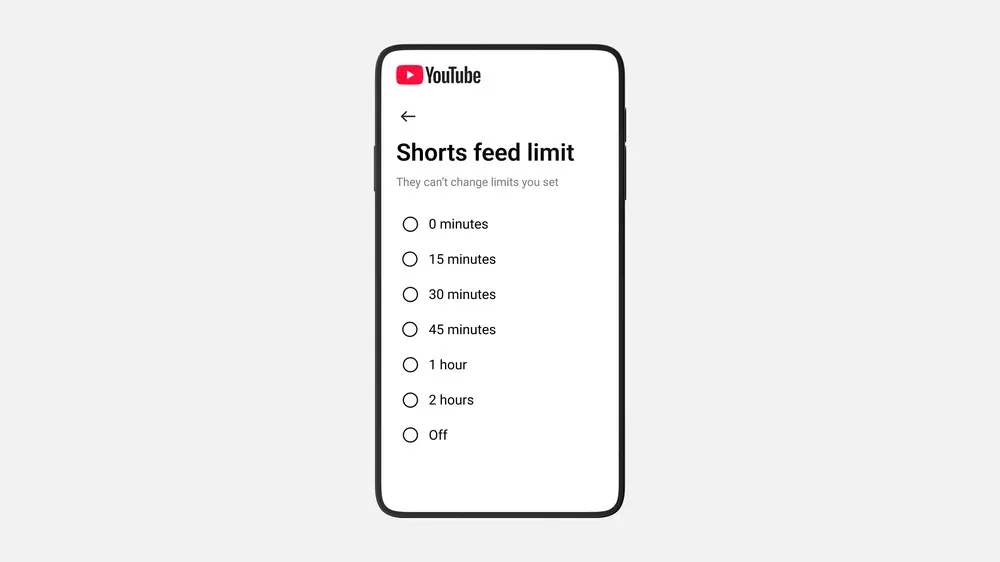
YouTube is broadening its digital wellbeing toolkit by allowing every user to set a zero-minute daily limit for Shorts, effectively erasing the endless vertical feed from view. The update, now rolling out on both Android and iOS, builds on a feature first introduced last October and subsequently expanded for supervised child accounts in January. With the latest change, anyone—parent, teen, or adult—can decide that no time at all should be spent swiping through short-form videos.
What exactly has changed?
When YouTube originally launched its Shorts feed timer in 2025, the lowest selectable cap was 15 minutes. The setting was aimed at nudging users to curb the rabbit-hole effect of quick-hit content that can easily stretch into an hour or more. A later update extended the control to parents managing supervised accounts, offering them the choice to set their child’s limit to zero minutes “in the near future.” That future is now; the zero-minute option is live for everyone.
Once the new threshold is applied and the daily quota is reached—or, in this case, starts at zero—YouTube removes Shorts as if the feature never existed. The Shorts tab changes into a static message stating that the limit has been reached, and the main Home tab no longer interleaves Shorts suggestions between standard videos. In tests, even autoplay recommendations for Shorts disappear.
How to activate the zero-minute limit
Finding the new switch is straightforward:
- Open the YouTube app on Android or iOS.
- Tap your profile avatar in the top right corner and select Settings.
- Navigate to Time management.
- Toggle on Shorts feed limit.
- In the time picker that appears, scroll all the way down to 0 minutes and confirm.
The change takes effect immediately. Should you wish to reverse course, simply revisit the menu and select a non-zero value or turn the feature off entirely.
Why YouTube is emphasizing limits now
Short-form video has quickly become a growth engine for social platforms, but it is also synonymous with high engagement loops. Industry researchers and watchdog groups have long warned that the infinite scroll design can exacerbate compulsive usage patterns, particularly among younger audiences.
YouTube spokesperson Makenzie Spiller confirmed that the zero-minute choice is intended to give users “more granular control” over how they allocate time on the platform. While the company did not share new data about viewing habits, prior public metrics show Shorts topping 50 billion daily views worldwide. Even a small percentage of that engagement migrating to longer videos—or pausing altogether—could shift both user satisfaction and ad revenue dynamics.
Implications for families and individual users
For parents, the addition plugs a clear gap: the ability to block the Shorts carousel without disabling YouTube entirely. Families who rely on the platform for educational or entertainment content now have a middle-ground solution that walls off only the bite-size reels that often spark marathon sessions.
Adult users stand to benefit as well. Surveys conducted by digital health nonprofits consistently rank social media time-tracking among the most requested self-control tools. Although Android and iOS both provide system-level app timers, YouTube’s in-app control is more surgical, targeting a single feed rather than the whole application.
Shorts versus traditional YouTube: A delicate balance
YouTube has poured significant resources into Shorts since its 2020 debut, positioning the format as a direct counter to TikTok and Instagram Reels. Creators have received dedicated monetization paths, remix tools, and separate analytics dashboards.
Imagem: YouTube
Allowing users to remove Shorts altogether might appear counterintuitive. However, YouTube has historically prioritized customizable experiences, from the long-running “Restricted Mode” for sensitive content to work-friendly autoplay settings. By offering opt-outs instead of forcing uniform consumption, the company can still cater to high-engagement Shorts viewers while retaining those who prefer traditional long-form uploads.
Other digital wellbeing features you might have missed
The zero-minute limit joins a suite of controls that users often overlook:
- Remind Me To Take A Break: Pop-up prompts at intervals you choose (5–180 minutes).
- Bedtime Reminders: Notifications nudging you to close the app at a preset hour.
- Autoplay Toggle: Disables the next-video autoplay on mobile and desktop.
- Data Usage Controls: Caps streaming quality on mobile networks to curb both distraction and data bills.
While none of these tools enforces a hard lockout like the zero-minute Shorts limit, they illustrate YouTube’s incremental approach to user autonomy: give people levers, but keep forceful intervention to a minimum.
Rollout timeline and availability
YouTube says the update is already live for all supervised child profiles. Adult accounts may see the option appear gradually over the next week as server-side changes propagate. No app update is required, but signing out and back in can speed up availability if the setting is missing.
Users on YouTube’s web interface do not have a comparable Shorts timer yet. Desktop viewers can instead use browser extensions, ad-block style filters, or the “Not Interested” feedback button to pare down Shorts recommendations, though none offers the one-tap completeness of the mobile toggle.
What it means for creators
For video makers who have embraced Shorts to reach new audiences, the news might sound alarming. In reality, the portion of viewers who will set their timer to zero is expected to be modest. However, creators should note a potential shift in analytics: if a segment of their subscriber base opts out, average view duration and click-through rates could fluctuate. Monitoring the impact and diversifying content formats remains a prudent strategy.
The bigger picture
Across the tech industry, platforms are feeling intensifying pressure—from regulators, mental-health advocates, and users themselves—to build safer, more mindful products. TikTok, Instagram, and Snapchat have each introduced dashboards or reminders, yet few offer the precise ability to remove a single feed entirely. YouTube’s move sets a precedent that competitors may be compelled to follow, particularly as lawmakers in several regions weigh age-appropriate design legislation.
Ultimately, the zero-minute Shorts limit underscores a growing recognition: attention is finite, and giving users the key to lock certain doors can strengthen, not weaken, their long-term relationship with a service.
FAQs
- Does the zero-minute limit delete my Shorts content or subscriptions?
No. The feature only hides the Shorts feed. Your history, likes, and uploads remain intact and reappear if you disable the limit. - Can I still watch a Short if someone sends me a direct link?
As of now, opening a direct URL to a Short still plays the video, even when the feed is hidden. The timer mainly disables browsing and recommendations. - Is the zero-minute setting available on shared family accounts?
Yes. Each profile under a Family group controls its own Shorts limit. Parents can also manage children’s limits through Family Link. - What happens after midnight—does the timer reset?
The Shorts timer, like YouTube’s other daily limits, resets at 12:00 AM local time. - Will YouTube add a similar limit for regular videos?
The company has not announced plans for a general video timer. System-level app limits in Android and iOS remain the primary option for entire-app restrictions.