Top Budget Smartphones of 2026: Performance and Value Under $600
With flagship handsets edging ever closer to the four-figure mark, buying a new phone can feel like an especially painful hit to the wallet. Fortunately, 2026 has delivered a refreshingly strong crop of sub-$600 devices that nail the basics and even sprinkle in a few premium perks. All of the major manufacturers have already revealed their affordable lineups for the year, giving shoppers a clear field of options without any imminent releases likely to shake up the category before early 2027.
After several weeks of testing, comparing benchmarks, camera samples, and battery-life logs, three models stand out as the smartest buys right now: Apple’s iPhone 17E, Google’s Pixel 10A, and Nothing’s Phone 4A Pro. Each addresses a slightly different set of priorities, but all deliver reliable performance, 5G connectivity, and multiyear software support at prices that leave enough money for a case, wireless earbuds, or even a weekend getaway.
Why the timing matters
Smartphone release cycles tend to follow predictable windows. Flagships dominate the first half of the year, while budget lines arrive in late summer and early fall. That cadence means we are currently in a sweet spot: manufacturers have finished rolling out their budget devices, and the next wave is still nearly a year away. For buyers, that translates to lower promotional pricing, firmware stability, and full clarity about which features will and will not be upgraded soon.
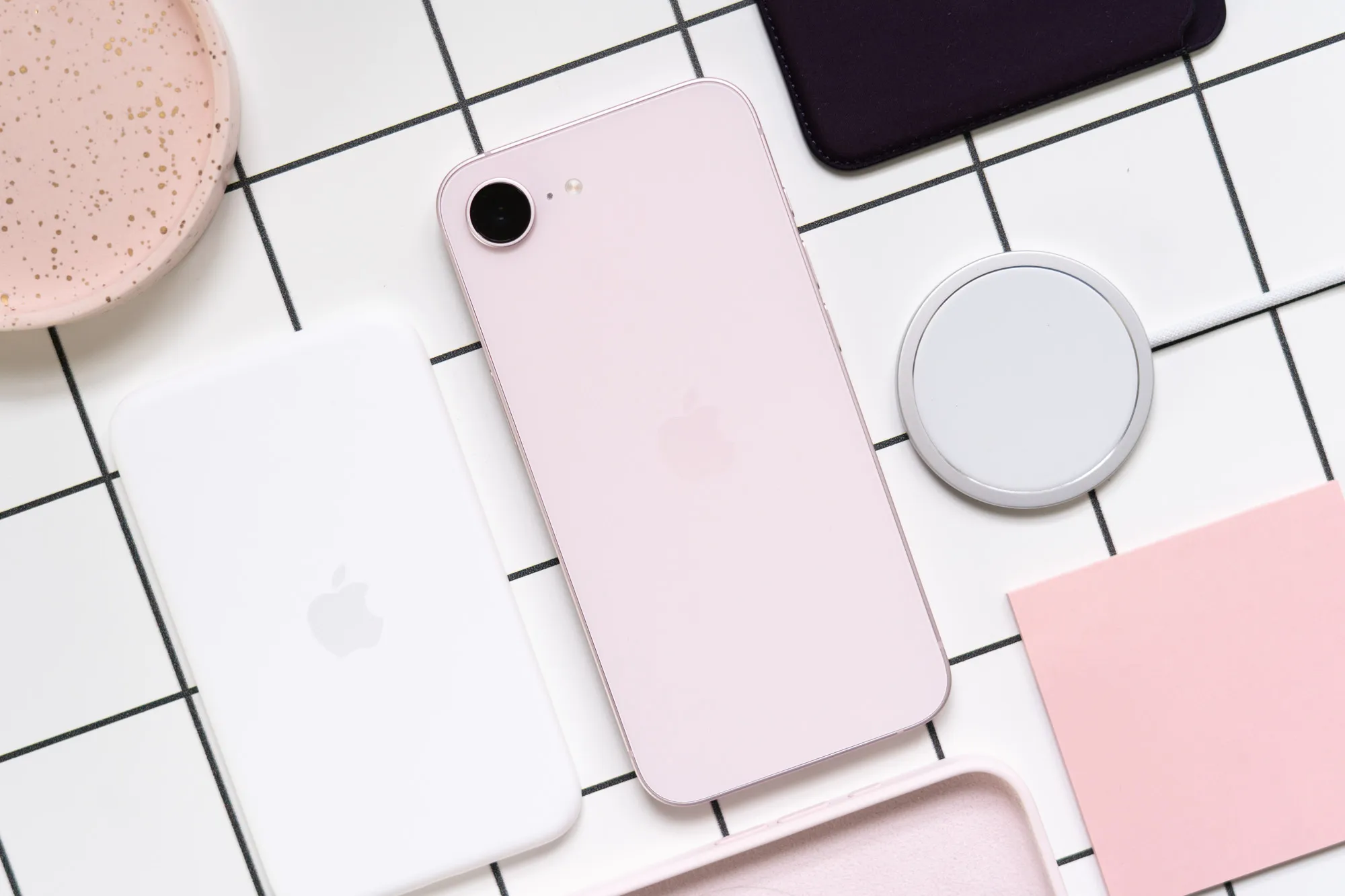
Apple iPhone 17E: Best overall performance under $600
Apple’s strategy for its “E” series—essentially distill the core iPhone experience and shave a few luxuries—has been consistent for years, but the 2026 edition takes a bigger leap than usual. The iPhone 17E inherits the same A19 chip powering the flagship iPhone 17 models, making it the single fastest handset you can buy in this price bracket. In day-to-day use, that translates to instantaneous app launches, stutter-free gaming, and enough headroom for at least five years of iOS updates.
- MagSafe comes to the budget tier. Wireless charging kept its glass-back form factor, but the addition of full-speed MagSafe magnets finally unlocks the entire ecosystem of snap-on accessories—from external batteries to wallets—without relying on older Qi pads.
- Display and build. The 6.1-inch OLED panel retains a 60 Hz refresh rate, a clear differentiator from Apple’s Pro models. Yet color accuracy, peak brightness, and durability (thanks to Ceramic Shield) still match pricier siblings.
- Camera system. A 12-megapixel primary sensor paired with Apple’s image-signal processor produces predictably balanced photos. Night mode, Smart HDR 6, and Photonic Engine algorithms are all present, though physical zoom remains limited to digital crops.
- Battery life. On a typical mixed-use day—LTE, 5G, and Wi-Fi streaming—the phone consistently crossed the six-hour screen-on threshold and still had 20 percent in reserve at bedtime.
If you have existing Apple hardware or AirPods, the seamless ecosystem lock-in makes the 17E almost a no-brainer. Limited storage tiers (128 GB and 256 GB) could be a constraint for heavy video shooters, but iCloud integration offers a workaround.
Google Pixel 10A: Best camera and software longevity for Android fans
On paper, the Pixel 10A might look like a minor refresh of last year’s wildly popular 9A. In practice, that familiarity works in its favor. The device retains Google’s ultra-clean Android interface, robust five-year update promise, and an imaging pipeline that embarrasses many pricier competitors.
- Tensor G4 lite SoC. While not as fast as Apple’s silicon, Google’s custom chip excels at machine-learning tasks: real-time speech transcription, on-device photo processing, and call-screening all run locally without detectable lag.
- Still the camera king. A 64-megapixel primary shooter uses computational photography tricks to pull more detail and dynamic range than competing sensors. Night Sight continues to outperform, and the new Ultra HDR mode preserves highlights in daylight portraits.
- Display and design. The 6.2-inch 90 Hz OLED panel is taller and slimmer than Apple’s equivalent, making one-handed use possible despite a slightly larger canvas.
- Battery and charging. A 4,600 mAh cell combined with efficient software tuning averaged more than seven hours of screen-on time in our evaluation. Wired charging climbs to 30 W, cutting a full recharge time to roughly 70 minutes. Wireless charging is still absent.
The Pixel 10A is a clear pick for anyone who prizes photography or wants Google’s excellent call management and security features. The plastic frame and lack of an official IP rating are marks against it, but a decent case remedies durability concerns.
Nothing Phone 4A Pro: Best big-screen alternative with distinctive style
London-based Nothing has cultivated cult status by turning phone backs into canvases of pulsing LED glyphs. But aesthetics alone would not earn the 4A Pro a spot on this list. The company also addressed two long-standing gripes: U.S. availability and software support.
- A display built for binge-watching. The 6.7-inch 120 Hz AMOLED panel is the brightest and smoothest among our picks. HDR10+ certification and thin symmetrical bezels make video binges genuinely immersive.
- Performance that holds its own. A Snapdragon 7+ Gen 3 gives the 4A Pro a leg up on heavy multitasking, though sustained gaming can trigger some thermal throttling after half an hour.
- Glyph interface 2.0. The upgraded LED layout adds more granular notifications, like progress bars for delivery services or timers, reducing the urge to turn the phone over every few minutes.
- Battery endurance. A 5,000 mAh pack regularly crossed eight hours of screen-on time. The trade-off is a slightly heavier chassis at 213 grams.
Nothing promises four Android version upgrades and security patches through 2031, finally matching what larger brands have offered for years. If bold design and a supersized screen appeal to you, the 4A Pro is the standout.
Imagem: Allis Johns
How to choose the right budget phone for you
Because all three options share core fundamentals—smooth performance, 5G radios, and reliable cameras—the deciding factors largely boil down to personal priorities.
- Ecosystem considerations. Already own an Apple Watch or a Mac? The iPhone 17E integrates more tightly with them than any Android handset can. Conversely, a Gmail-heavy workflow or Nest smart-home setup will feel more at home on the Pixel 10A.
- Display preferences. If high refresh rates and spacious screens matter most, Nothing’s 4A Pro is the obvious winner. Apple remains stuck at 60 Hz on its budget tier, so smooth-scrolling enthusiasts should look elsewhere.
- Photography style. Night owls and casual shooters who want tap-and-forget excellence will see the greatest gains from Google’s computational tricks. Apple’s camera is wonderfully consistent, but low-light shots retain a bit more noise.
- Futureproofing. Apple leads on processor longevity, but Google and Nothing have aggressively improved their update timelines. All three are safe bets for at least half a decade, easing anxiety about early obsolescence.
- Charging habits. Need wireless charging? The iPhone 17E is the only option here that supports it natively, and MagSafe expands accessory convenience. Fast wired speeds, however, are best served by the Pixel 10A and Nothing 4A Pro.
The one to avoid cutting corners on: Software updates
Bargain-hunters sometimes fixate on raw specifications—more RAM, bigger batteries, or higher megapixels—while ignoring the more critical promise of software support. An unpatched security flaw or abandoned OS upgrade can turn a great deal into an expensive liability. Before clicking “buy,” check each manufacturer’s commitment:
- Apple typically provides iOS updates for about six years after release.
- Google pledges five years of OS updates and security patches for the Pixel 10A.
- Nothing has confirmed four major Android versions plus five years of security fixes.
In other words, all three selections beat the average lifespan of many cheaper import phones that may never see even a single incremental patch.
Where to find the best prices
Carrier promotions can occasionally undercut manufacturer list prices, especially if you are willing to trade in an older handset. Major carriers are currently offering trade-in credits ranging from $100 to $300 on any functional smartphone, often bringing the effective cost of these devices below $400. Unlocked models are widely available through standard electronics retailers for shoppers who prefer the flexibility of switching networks at will.
Keep an eye on holiday events—Memorial Day, Labor Day, and end-of-year flash sales—when retailers routinely slice an extra $50 to $75 off sticker prices. Because the next generation of affordable handsets is not expected until Q1 2027, buying now carries minimal risk of an early supersession.
Bottom line
Choosing a sub-$600 phone no longer means sacrificing polish or future readiness. Whether you lean toward Apple’s bulletproof ecosystem, Google’s AI-driven software suite, or Nothing’s daring design language, the 2026 budget class offers real choice without compromise. The key is to weigh your must-have features—camera prowess, display quality, or accessory versatility—against the strengths of each model. Whichever route you take, rest assured that affordable no longer means second-rate.
FAQ
- Q: Does the iPhone 17E support the same MagSafe accessories as higher-end models?
A: Yes. The magnets and charging coil are identical, so wallets, battery packs, and car mounts designed for the flagship iPhones work seamlessly. - Q: How long will the Pixel 10A receive Android updates?
A: Google guarantees five years of both OS upgrades and monthly security patches, ending in 2031. - Q: Is the Nothing Phone 4A Pro water-resistant?
A: It carries an IP54 rating, meaning it is protected from light splashes and dust but should not be submerged. - Q: Which phone has the best battery life?
A: While real-world results vary, the Nothing 4A Pro’s 5,000 mAh battery and larger chassis generally outlast the other two in continuous screen-time tests. - Q: Can I expand storage with a microSD card?
A: None of the three phones support expandable storage. You will need to choose a storage tier carefully or rely on cloud services. - Q: Which phone is best for mobile gaming?
A: The iPhone 17E’s A19 chip delivers the most consistent high-frame-rate experience, though its 60 Hz display caps visual smoothness compared with the 120 Hz panel on the Nothing 4A Pro. - Q: Why is a high refresh rate important?
A: Displays that update at 90 Hz or 120 Hz make scrolling, animations, and compatible games look smoother and more responsive than standard 60 Hz screens. - Q: Are any of these devices dual-SIM capable?
A: The iPhone 17E supports one physical nano-SIM and one eSIM. The Pixel 10A and Nothing 4A Pro offer dual-SIM functionality through a single physical tray and an additional eSIM.