Bio-Hybrid Brain Tech Nears Human Trials as Science Corp. Recruits Yale Neurosurgery Chief
Imagine lab-grown neurons that can wire themselves into your brain and talk to a computer. That’s the vision now moving from whiteboards to operating rooms at Science Corporation, the quietly ambitious startup headed by Neuralink co-founder Max Hodak.
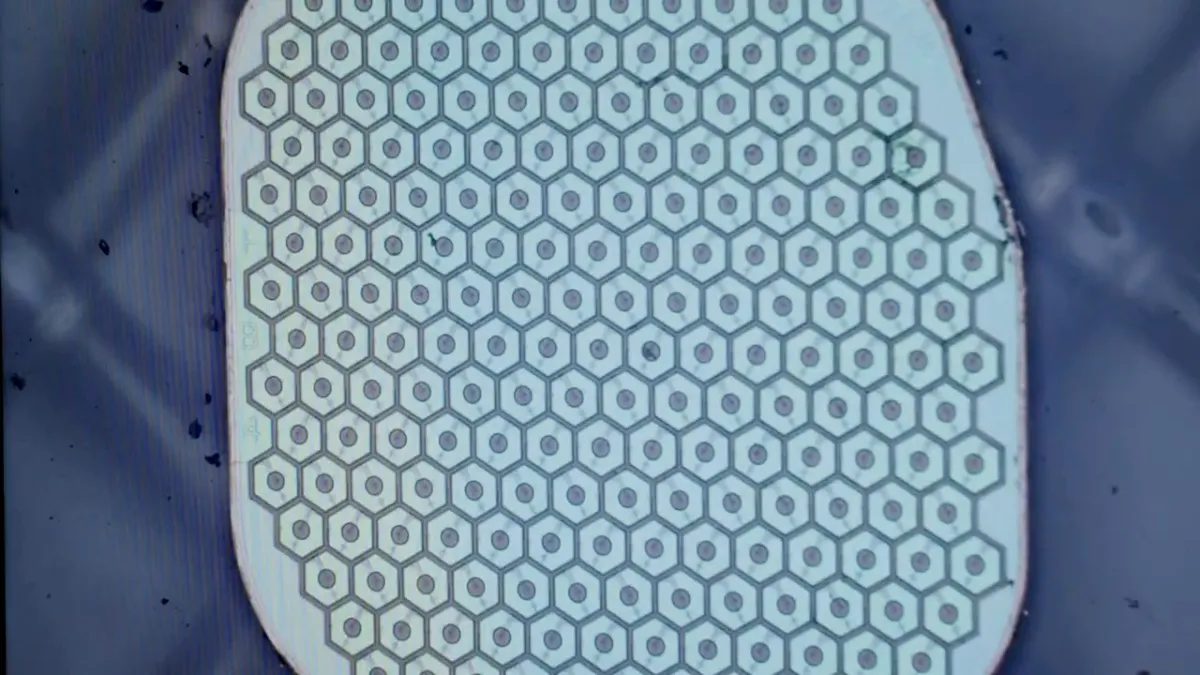
The company has just signed Dr. Murat Günel, chair of neurosurgery at Yale School of Medicine, to steer its first U.S. human studies. Two years of back-and-forth ended with the veteran surgeon agreeing to help place Science Corp.’s first sensor—a device the size of a pea packed with 520 electrodes—onto a living human cortex.
A $1.5 Billion Bet on a New Kind of Interface
Science Corp. launched in 2021 and last month closed a $230 million Series C round that lifted its valuation to roughly $1.5 billion. While the startup already owns PRIMA, a retinal implant aimed at restoring vision lost to macular degeneration, Hodak’s deeper dream is full-fledged brain-computer connectivity—treating disease first, then augmenting human capability.
Traditional brain-computer interfaces rely on metal electrodes pushed directly into brain tissue. They can decode thoughts well enough to let paralyzed patients move cursors and type words, but over time the stiff probes can scar neural tissue and degrade performance. Günel argues that endlessly pushing sharper, thinner metal “needles” is a dead end.
Science Corp.’s alternative: merge biology with electronics.
How the Bio-Hybrid Sensor Works
- Organic bridge: Researchers grow neurons in the lab and embed them in a flexible chip.
- Light pulses: Those neurons are genetically tuned to respond to flashes of light, allowing precise stimulation.
- Natural integration: Once the wafer-thin device rests against the brain, the cultured cells are expected to link up with the patient’s own neurons, smoothing communication in both directions.
In 2024, the team published rodent data showing the implant can sit safely beneath the skull and trigger targeted neural activity. Now the focus is refining prototypes and producing neuron lines that meet strict medical-grade standards for different disorders.
First-in-Human Plan: Piggybacking on Necessary Surgeries
Unlike the high-profile Neuralink approach that pierces brain tissue, Science Corp.’s sensor will lie on the brain’s surface, tucked under the skull. That design difference is central to a daring regulatory strategy: the company believes it can begin human studies without a full Investigational Device Exemption from the Food and Drug Administration.
The reasoning? Patients selected for the study will already be undergoing major cranial surgery—for example, stroke victims whose skull lids must be removed temporarily to relieve swelling. While surgeons have the brain exposed, Günel intends to slip the wafer in place, closing the skull afterward with no extra incisions.
Because the sensor adds no meaningful risk in a procedure that is already life-saving, Science Corp. expects hospital ethics boards to green-light the trial. Initial goals are cautious: confirm the implant records brain signals accurately and does not provoke inflammation or other complications.
Timeline
- 2024–26: Device optimization and manufacturing scale-up
- 2026: Submission to institutional review boards (IRBs) and patient recruitment
- 2027: First implantation, if everything remains on schedule
Günel calls that timeline “optimistic but attainable,” provided preclinical safety remains solid.
Therapeutic Targets Beyond the Pilot Study
The initial clinical test will omit the lab-grown neurons; it’s just the electrode array. Yet even this pared-down version could carry therapeutic punch. One idea: deliver gentle currents to damaged tissue surrounding a stroke or spinal-cord injury, coaxing cells back to health.
Future upgrades that include integrated neurons would broaden the palette:
- Parkinson’s disease: Replace dying dopamine-producing cells while simultaneously modulating neural circuits to quell tremors.
- Drug-resistant epilepsy: Monitor brain rhythms continuously and send pre-emptive stimulation to avert seizures.
- Neuro-oncology: Track electrical patterns near tumors to warn caregivers of swelling or impending neurological crashes.
- Sensory expansion: Eventually, Hodak envisions piping entirely new kinds of data—infrared light, ultrasonic maps, even internet streams—directly into cortex, granting “extra senses.”
Financing the Moonshot
The $230 million Series C, led by undisclosed investors, gives the startup unusually deep pockets for a pre-revenue medical device company. Hodak has said the cash runway will last “years,” funding not only the sensor line but also the commercial rollout of PRIMA in Europe once regulators sign off.
PRIMA itself is a relevant proof point: a photovoltaic chip replacing lost photoreceptors in the eye communicates with camera-equipped glasses to restore crude vision. By demonstrating that neural prosthetics can be manufactured, implanted, and reimbursed, Science Corp. hopes to reassure investors—and eventually regulators—that its brain programs belong in the same conversation.
Why Yale’s Star Surgeon Signed On
Günel has performed thousands of delicate brain operations, published extensively on cerebral aneurysms, and leads one of the busiest neurosurgery programs in the United States. He was skeptical at first. Then came the rodent data, and the realization that bio-hybrid architecture could sidestep the scarring problem that haunts conventional electrodes.
“Using natural neuronal connections to form the interface is genius,” he says. “If we can show safety and stability, we unlock treatments that today seem like science fiction.”
His presence also helps address a common criticism of bleeding-edge neurotech: the lack of seasoned, independent clinicians guiding the science. Günel will sit on Science Corp.’s medical advisory board, shape trial protocols, and personally perform many of the implantations.
Imagem: Internet
The Competitive Landscape
Neuralink grabbed headlines earlier this year by inserting a device in its first human volunteer. Other outfits—Synchron, Paradromics, Precision Neuroscience—are racing down parallel tracks, each with its own blend of flexible electrodes, minimally invasive insertion tools, and AI decoding software.
Science Corp.’s hybrid cell-chip design stands out, but it also adds complexity. Cell culture facilities must meet stringent FDA standards, and long-term viability of transplanted neurons remains unproven in humans. The payoff, however, could be dramatic resilience and biocompatibility that metal alone can’t match.
Ethics and the Long Game
Turning people into cyborgs raises classic bioethics questions—autonomy, consent, privacy. Hodak insists medical benefit comes first: paralysis, blindness, neurodegeneration. Enhancement is a “later phase,” he says, but admits it’s the ultimate frontier.
Some ethicists fret that elective cognitive upgrades could widen social inequality. Others warn that streaming raw neural data might invite new forms of surveillance. By routing early experiments through patients who already need surgery, Science Corp. hopes to keep the conversation grounded in therapeutic reality.
Still, the company will have to persuade policymakers that its no-FDA-required trial is truly low-risk, especially in an era of heightened scrutiny over experimental implants. Should complications arise, the regulatory latitude could vanish overnight.
What Success Would Look Like
In five years, the company hopes to demonstrate:
- Long-term sensor stability with minimal scar tissue
- Bidirectional communication—recording and stimulating—in humans
- Measurable clinical benefit in at least one neurological disorder
- A clear path to scalable manufacturing of living-cell electronics
If those boxes get checked, the road to more audacious capabilities—think silent text messaging via thought or adding night-vision—becomes easier to imagine, though still fraught with societal hurdles.
The Road Ahead
For now, all eyes are on that first implantation. A routine stroke decompression surgery, a wafer slipped under bone, a cable emerging briefly to an external port—mundane steps that could mark the start of a new era where biology and silicon truly merge.
Günel sums up the stakes: “In neurosurgery, we’ve spent decades cutting out tumors, clipping aneurysms, placing electrodes. What if the next chapter is about repairing and enhancing the brain with living technology? That’s why I’m in.”
FAQ
What makes Science Corp.’s device different from other brain implants?
It combines traditional electronics with lab-grown neurons designed to bond with the patient’s own brain cells, aiming for a more natural and durable interface.
Will the first human study include the lab-grown neurons?
No. The initial trial uses only the electrode array to verify safety and signal quality. Embedded neurons will come in a later phase.
Does the company need FDA approval to start?
Science Corp. believes it can proceed under hospital ethics oversight because the device is implanted during surgeries already required for medical reasons. The FDA could still intervene if unforeseen risks emerge.
When might patients see real clinical benefits?
If early studies succeed, larger therapeutic trials could begin late this decade. Commercial availability would still depend on extensive testing and regulatory review.
Is human enhancement the ultimate goal?
Yes, but only after medical applications are proven. Founders envision adding new senses and seamless machine-brain communication, though ethical and regulatory debates will shape how far—and how fast—that future arrives.