

Smart Feeder Upgrade Brings 4K Views and AI Insights to Backyard Bird-watching
Bird-watching has long been a pastime that rewards patience, a good pair of binoculars, and a bit of luck. In recent years, however, a wave of connected gadgets has started to redefine the experience, letting enthusiasts observe wildlife from the comfort of a couch or a desk chair. The newest entrant in this growing category is the Birdfy Feeder Metal 2, a second-generation smart feeder that combines a sturdier build with sharper video and more capable artificial intelligence.
Sharper images, same squirrel-proof approach
The first Birdfy Feeder Metal earned attention for two key attributes: a housing made from chew-resistant metal panels and a built-in camera that could send 1080p video straight to a phone. Those pillars remain, but the upgrade to a 4K wide-angle sensor promises clearer close-ups, richer colors, and the ability to zoom without losing as much detail. Whether the subject is a cardinal’s vivid red plumage or the subtle markings on a finch, the extra resolution should deliver crisper footage than the previous model could muster.
Protecting that video stream—and the seed supply—was clearly a focus during the redesign. Many bird lovers know the frustration of filling a feeder only to watch squirrels empty it within hours. The Metal 2 borrows the same chew-proof exterior as its predecessor, leveraging metal side panels that deter gnawing. At 1.8 liters, its interior reservoir holds a respectable amount of seed, which can translate to fewer refill trips and more time spent enjoying the show.
AI that teaches, not just tags
The camera hardware is only half of the story. Birdfy’s AI analytics platform, called OrniSense, has also evolved. The previous generation could identify birds and then direct users to a sizable database for further reading. Version two goes a step further by assembling a brief, personalized write-up each time a new avian visitor appears. That summary might cover migration patterns, diet preferences, or fun trivia—essentially acting as a digital field guide that arrives in real time.
According to the company, the latest algorithm recognizes more than 6,000 bird species worldwide. That expanded library aims to reduce instances where a less common species is flagged as “unknown,” a shortcoming early adopters occasionally reported. While high-level identification used to be the finish line for many consumer bird cams, Birdfy’s software sets out to deepen engagement by explaining why a certain species might be present in a backyard at a specific time of year, or how its plumage changes with the seasons.
Connectivity made easier
Any outdoor tech faces a primary hurdle: decent Wi-Fi. The farther a feeder is from a router, the spottier the signal can become. Birdfy’s answer is a new external antenna designed to boost range. The firm does not claim a specific maximum distance, but it says that many users should be able to place the feeder at the edge of a sizeable yard without investing in extra extenders. Once connected, video streams are intentionally capped at 20 frames per second. Birdfy argues that the lower frame rate reduces buffering and helps maintain stability, even on average home networks, while still allowing slow-moving subjects—birds perched at a feeder—to appear smooth.
Solar power and weather resistance
Powering an outdoor gadget can be more complicated than placing it within Wi-Fi range. The Metal 2 aims to simplify installation further by integrating a solar panel on its roof. Under normal daylight conditions, the panel can keep the onboard battery topped up, meaning many households will not need to run electrical cables or routinely swap batteries. In cloudy climates or shaded yards, the feeder can still be charged via USB-C as a backup.
An IP66 rating rounds out the hardware story, certifying that the unit can withstand heavy rain, dust, and wide temperature swings. That rating does not mean the feeder should be submerged, but it does suggest it can survive storms without needing to be brought inside.
Pricing, subscriptions, and the lifetime option
The Birdfy Feeder Metal 2 with the 4K camera is available now at a launch price of $269.99. As with many connected devices, the upfront cost is only part of the equation. Access to OrniSense’s advanced bird recognition and educational summaries requires a subscription—monthly or yearly—although the company has not finalized rates. For reference, the previous generation’s plan cost $4.99 per month or $49 annually.
For buyers wary of recurring fees, Birdfy offers a second bundle at $299.99 that includes lifetime access to the AI features. The $30 premium could appeal to long-term users who plan to keep the feeder for several seasons and prefer predictable, one-time pricing.
How it stacks up in a growing market
Smart feeders are no longer a curiosity; they represent a niche but legitimate subcategory of consumer electronics. Competing products often emphasize one or two strengths—ultra-high-resolution cameras, solar roofs, or sophisticated machine vision—while leaving other areas as potential trade-offs. With the Metal 2, Birdfy appears to be aiming for a balanced approach by combining moderate pricing with an across-the-board feature set: solid build quality, high-resolution imaging, AI identification, and low-maintenance power.
- Resolution: 4K sensor up from 1080p
- Frame rate: 20 fps (capped)
- Seed capacity: 1.8 liters
- Construction: Chew-resistant metal panels
- Power: Integrated solar panel with USB-C fallback
- Connectivity: Enhanced Wi-Fi antenna
- Weatherproofing: IP66 rating
- AI recognition: 6,000+ species, personalized summaries
- Price: $269.99 or $299.99 with lifetime AI
Potential use cases beyond bird-watching
While marketed primarily to birders, a feeder with a 4K camera and real-time alerts can serve multiple roles. Gardeners interested in tracking which species disperse seeds across their yard might glean insights into plant distribution. Families with children can turn casual backyard moments into informal science lessons. And property owners in rural areas may use the live feed to keep tabs on other wildlife, from chipmunks to the occasional raccoon.
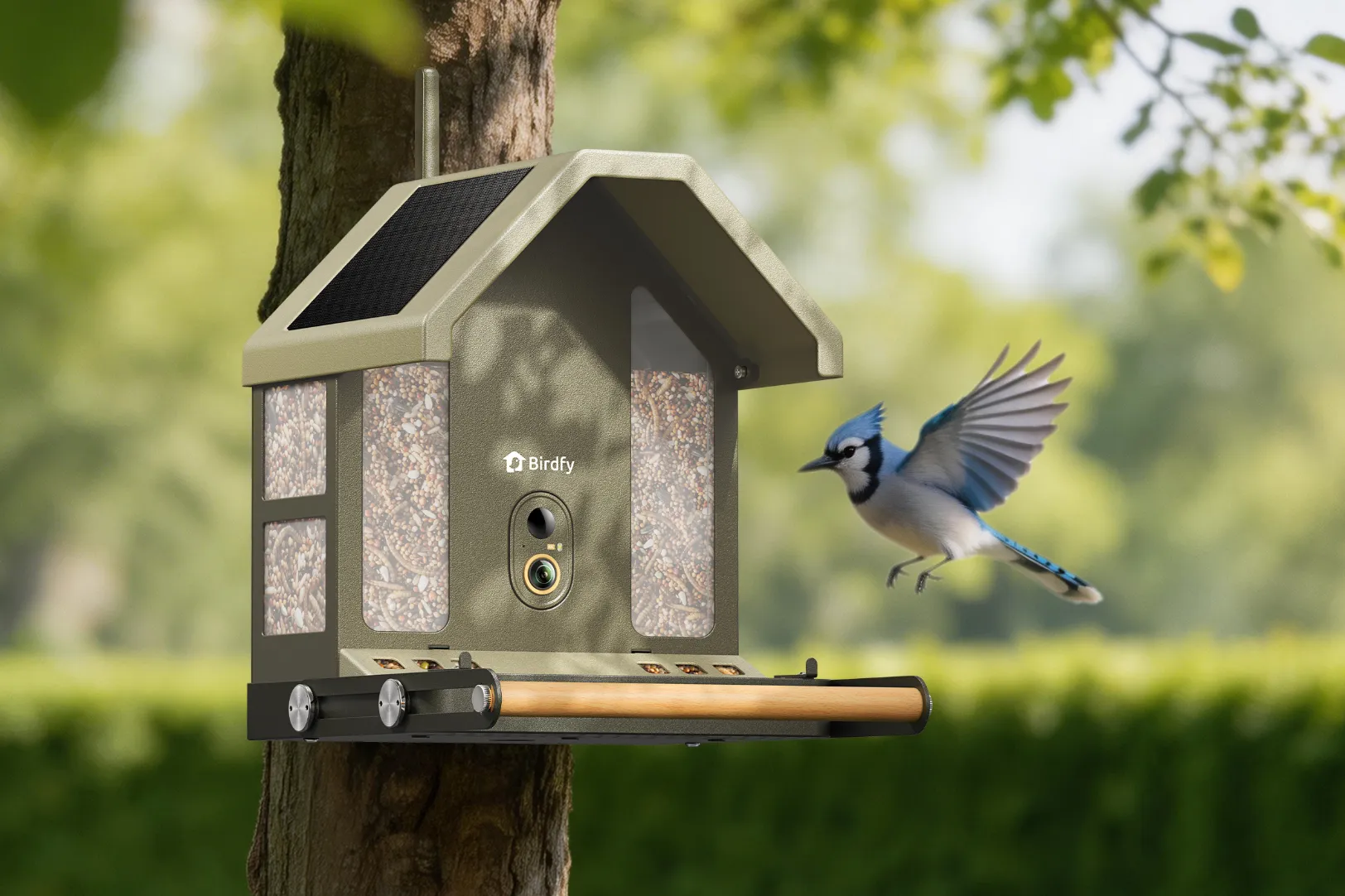
Imagem: Andrew LiszewskiCloseAndrew LiszewskiSen
Early impressions and what to watch
Review samples only started shipping this week, so comprehensive field tests have yet to surface. Points to monitor in the coming months include how well the solar panel handles overcast winters, whether the external antenna truly negates the need for a range extender, and how consistently OrniSense can differentiate look-alike species. If the AI’s promised 6,000-species accuracy holds up, casual observers may find themselves identifying birds they never realized frequented their yards.
Another metric will be the reliability of push notifications. Immediate alerts are invaluable for users hoping to capture a rare sighting, but they can also become intrusive if not finely tuned. Early adopters will likely weigh in quickly on social media and forums, influencing whether the lifetime plan seems like a wise investment.
The bigger picture: tech meets conservation
Gadgets like the Metal 2 hint at a broader intersection between consumer technology and environmental awareness. By cataloging which species appear—and when—owners unwittingly gather data that, in aggregated form, could inform conservation efforts. Companies have begun to explore partnerships with academic institutions, providing anonymized bird sighting logs that help track migration shifts tied to climate change. Birdfy has not announced such collaborations, but its ever-expanding AI database suggests the door could be open.
Whether the ultimate goal is scientific contribution or simply the joy of watching a blue jay snatch a sunflower seed in razor-sharp 4K, the latest smart feeder underscores how quickly backyards are becoming test beds for consumer AI.
Frequently Asked Questions
Does the Birdfy Feeder Metal 2 require a subscription?
No, basic live streaming works without a plan, but AI identification and educational summaries need an active subscription unless you purchase the $299.99 version with lifetime access.
Can the feeder operate entirely on solar power?
In most sunny conditions, yes. The integrated panel is designed to keep the battery charged, but shaded installations or prolonged cloudy weather may require occasional USB-C top-ups.
Is the 4K video stored locally or in the cloud?
Video is streamed to the companion app in real time. Local storage options vary depending on the user’s subscription tier, so check Birdfy’s plan details before purchase.
How far from my house can I place the feeder?
The exact range depends on obstacles and router strength, but the new external antenna is meant to improve coverage in larger yards. Users should test signal quality before mounting the unit permanently.
What happens if a squirrel still manages to tamper with it?
The metal panels are intended to resist chewing, and the feeder’s design makes seed theft difficult. However, no deterrent is foolproof, so placement away from overhanging branches can further reduce squirrel access.
